
India
Modi And Putin Hold New Delhi Bilateral Ahead Of BRICS Summit
India and Russia press trade, defence, and supply-chain cooperation further.
India and Russia press trade, defence, and supply-chain cooperation further.
India’s talks with Russia underline a partnership that is still anchored in defence and energy but increasingly driven by economics and . With trade, and on the table, both sides are trying to turn a long-standing into a broader economic one without losing the leverage that comes from it.
The next stage for the partnership is whether the two countries can turn summit rhetoric into durable trade growth, secure supply chains and workable . The real constraint is not the political symbolism of , but whether India and Russia can sustain the economic channels needed to reach their targets.
Immediate reactions focused on whether the meeting would produce concrete follow-up on , , defence work and energy ties. Observers also read the talks as a test of how far India can maintain while expanding cooperation with Russia during a .
The meeting was paired with attention to industrial cooperation and the first Indian hosting of Russia’s , which was described as a way to deepen trade and production links. The emphasis suggested that future gains would depend on moving from diplomatic pledges to manufacturing and .
The Modi-Putin bilateral took place inside the larger summit sequence, which was framed around , trade, investment and critical supply chains. That setting gave India and Russia a platform to present their cooperation as part of a broader reformist agenda rather than a bilateral alignment alone.
The meeting kept at the center of India-Russia ties, with reported discussion of new equipment, upgrades and sustainment of existing systems. This matters because still shape India’s military readiness and procurement choices.
Coverage around the meeting said , including new power plant cooperation, remained part of the agenda. Energy cooperation stayed central because it connects crude oil trade, , long-term supply arrangements and broader economic ties.
Live reporting said the talks also extended to mobility, and , showing how the partnership is being tied to supply-chain needs. This linked the bilateral to India’s industrial policy and to Russia’s role as a possible source of strategic inputs.
Official statements said the leaders reviewed progress across political, economic, defence, energy, space, skill mobility and people-to-people domains. The Russian side also said the meeting covered BRICS, , while both sides highlighted follow-up on industrial and trade cooperation.
During the bilateral, the two sides discussed boosting annual trade toward the that has become the headline economic benchmark for the relationship. Reports said the target was treated as a practical goal for expanding commerce beyond the current base and for building more balanced growth.
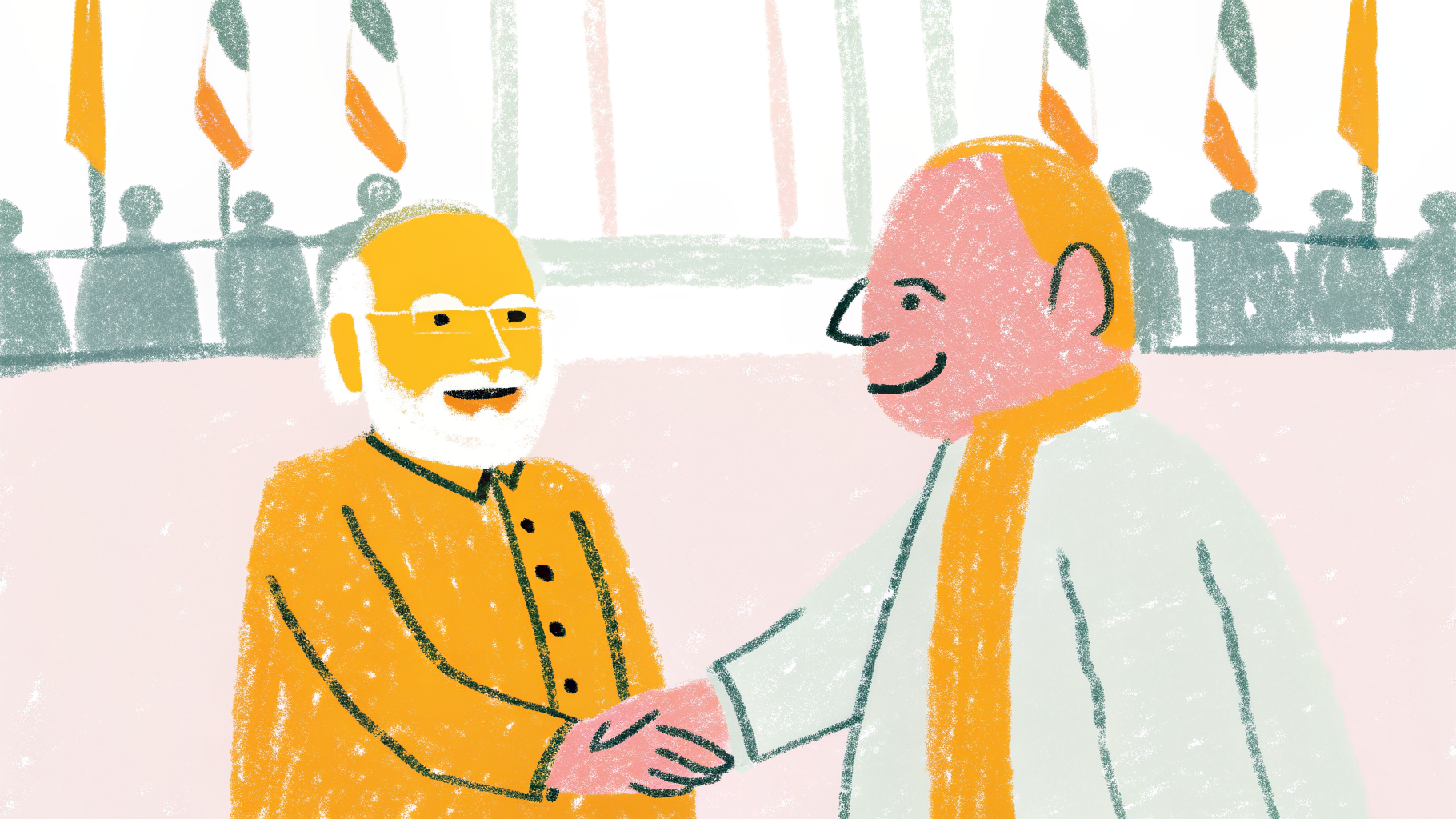
Prime Minister Narendra Modi and President Vladimir Putin held their in New Delhi ahead of the BRICS summit. The talks covered trade, defence, energy, space, and , with both sides treating the meeting as a major strategic checkpoint.
Background coverage highlighted how Russia’s war in Ukraine and had pushed India-Russia trade into a new shape, with becoming a major driver. That shift made energy cooperation central to the bilateral relationship and raised questions about payments and .
Reporting on the summit said leaders including Vladimir Putin were arriving in New Delhi for the gathering hosted by India on September 12 and 13. The summit atmosphere placed India’s balancing act, between , Russia ties and wider global pressure, at the center of the diplomatic agenda.
Pre-summit coverage said the leaders were likely to discuss Russian-made fighters, the and possible upgrades to and other platforms. Defence remained a core pillar of the relationship because India still depends on Russian equipment, spares and maintenance support.
Ahead of the summit, reports said India and Russia were trying to broaden economic ties beyond . The next phase was described as involving , investment, and industrial cooperation, all aimed at making the $100 billion target more realistic.
Indian officials and reporting said were becoming a key topic for the Modi-Putin meeting. The talks were expected to cover access to Russian resources, processing and , with India seeking secure inputs for electric vehicles, renewable energy, electronics and defence manufacturing.
Coverage of the New Delhi summit said the BRICS meeting would focus on food and energy security, health, disaster resilience, , trade, investment and technology. The broader summit framing set the stage for the Modi-Putin talks as part of India’s wider BRICS priorities.
Reports in Indian media said Prime Minister Narendra Modi and President Vladimir Putin were scheduled to hold a on the sidelines of the BRICS summit in New Delhi. The expected agenda included trade, , and other areas of strategic cooperation.
In New Delhi, S. Jaishankar and Russian Foreign Minister Sergey Lavrov held talks focused on , coordination and wider regional issues. The meeting reinforced the idea that the partnership was moving beyond routine diplomacy into a broader economic and strategic agenda.
India and Russia publicly framed their economic relationship around a new target of by 2030. Indian and Russian officials said the goal would require deeper cooperation in trade, investment and .