
Business & Economy
How Fuel Prices Are Shaping Aviation in India
India’s Aviation Squeeze: Fuel, War, and Rising Costs
India’s Aviation Squeeze: Fuel, War, and Rising Costs
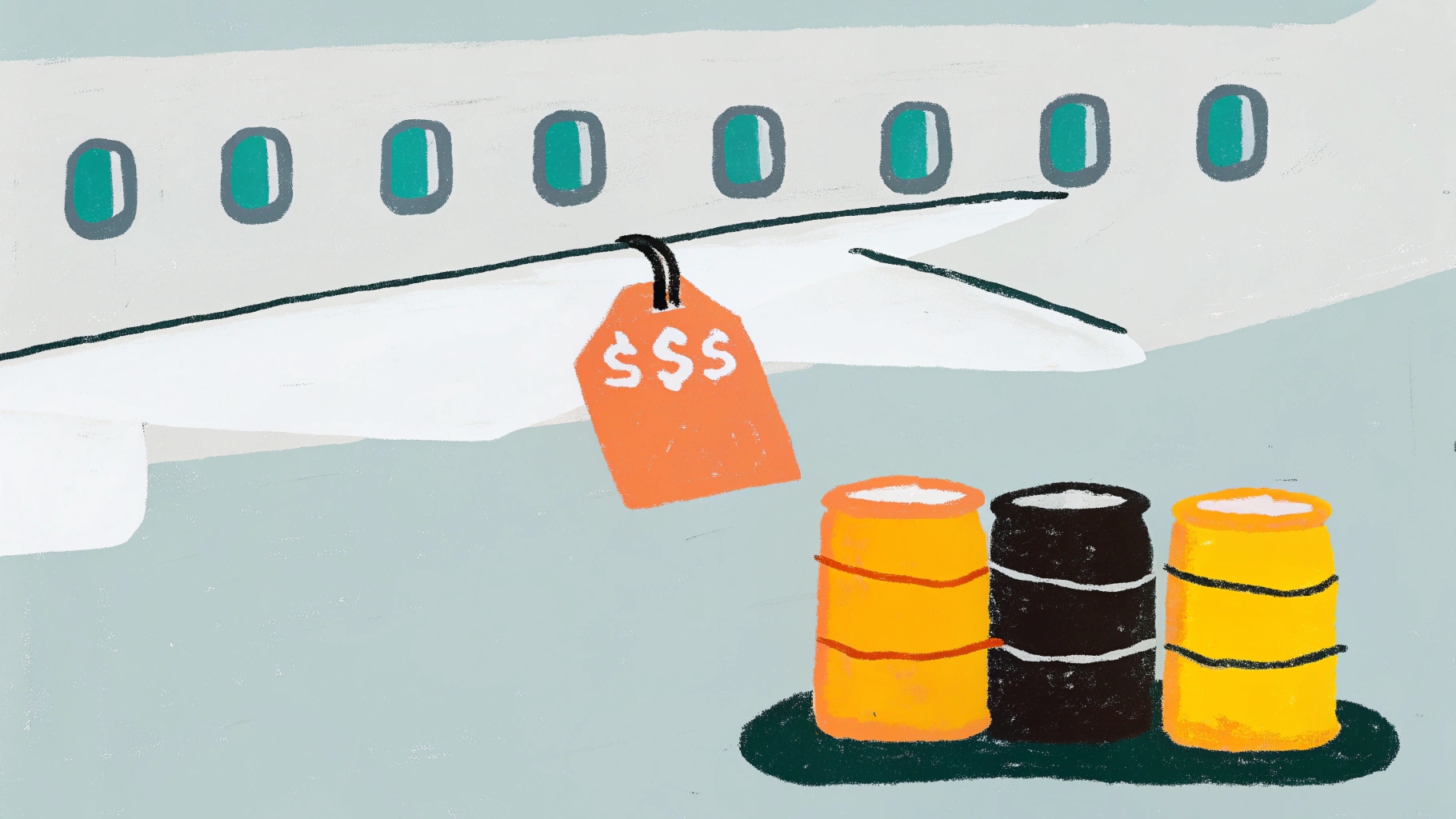
India’s aviation sector sits at the center of a fuel-driven economic chain, where global oil prices directly shape airline costs and travel demand. alone makes up nearly 40 percent of airline expenses, so even small price changes can sharply impact profitability and ticket prices. 
Because India depends heavily on imported crude, global events like conflicts or supply disruptions quickly push fuel prices higher, creating immediate pressure on airlines.  This forces airlines to either raise fares or absorb losses, often leading to reduced routes and unstable pricing.
At the same time, aviation is a key economic engine, supporting millions of jobs and enabling tourism, trade, and regional growth.  When aviation slows due to high fuel costs, these sectors also take a hit.
This creates a feedback loop where fuel prices affect aviation, and aviation in turn impacts the broader economy. In a fast-growing but price-sensitive market like India, this loop is especially strong, making fuel volatility a major economic risk.
prices for international airlines in India increase by 5 percent, or USD 76.55 per kilolitre, reaching USD 1511.86 per kl in Delhi. This marks the second consecutive monthly rise amid . Domestic airline prices remain unchanged as oil companies absorb higher input costs. The hike aligns with international benchmarks under .
Airlines across regions begin emergency cost control measures as fuel prices surge. Companies prepare for sustained high fuel costs and operational disruptions. are increased significantly on international routes. This reflects the scale of across the global aviation sector.
Airlines including Indian carriers suspend or reduce flights to key . Thousands of flights are cancelled as increase. The , one of the busiest globally, sees a sharp decline in operations. This disrupts travel for workers, businesses, and tourists.
on rise dramatically, in some cases up to five times normal levels. Longer routes increase fuel consumption while pushes prices higher. Business travel and emergency travel are heavily impacted. This shows how aviation costs are transmitted directly to consumers.
India’s aviation regulator issues an advisory directing airlines to avoid over 10 across West Asia. Airlines are forced to redesign routes and carry extra fuel for longer . This increases both travel time and operating costs. Safety concerns begin directly shaping flight planning decisions.
Following the escalation of the West Asia conflict, multiple countries including Iran, Israel, Iraq, and UAE close their . Thousands of flights are cancelled globally, leaving passengers stranded across regions. Airlines suspend operations to high risk destinations. This marks one of the largest aviation disruptions since the pandemic.
Industry analysts downgrade the due to rising fuel costs and . Airlines face both higher costs and uncertain demand. adds to financial pressure. This reflects growing stress across the aviation sector.
India increases Aviation Turbine Fuel prices by around following global oil price increases. The rise reflects international market trends rather than domestic supply changes. Airlines face higher costs, especially on . This shows how transmit into domestic aviation.
across West Asia force airlines to , increasing travel distances. This leads to higher fuel consumption and longer travel times. Routes between are particularly affected. Airlines face rising costs beyond fuel price increases.
rise sharply as global oil markets react to supply disruptions. Airlines across the world face increased . The surge reflects how sensitive fuel markets are to . This creates immediate financial pressure on aviation.
The West Asia conflict involving Iran, Israel, and the US disrupts , especially through the . This region carries a large share of global oil trade. Supply risks push global higher. Aviation Turbine Fuel prices begin rising as a result.
Rising Aviation Turbine Fuel prices increase airline costs, which are passed on through higher or reduced routes. reduce travel when fares rise. Airlines may cut capacity to manage costs. This directly affects , especially in smaller cities.
Aviation supports millions of jobs and contributes significantly to India’s economy. It enables tourism, business travel, and movement of . This creates a across sectors like hospitality and logistics. Aviation acts as critical infrastructure for .
significantly increase Aviation Turbine Fuel prices in India compared to global averages. Different states impose different , creating uneven cost structures across airports. This raises operating costs for airlines regardless of efficiency. It also reduces competitiveness against .
India uses to determine Aviation Turbine Fuel prices. This links domestic fuel costs to rather than local production. also affect pricing since oil is traded in dollars. This exposes airlines to global volatility beyond domestic control.
makes up around for airlines. This makes fuel the single most important factor in airline . Since fuel consumption is unavoidable for flights, airlines cannot easily reduce this cost. As a result, directly shapes pricing and financial performance.