
World
West Asia War Tracker - June '26
US lifts blockade; Iran halts nuclear weapons; trade route restored
US lifts blockade; Iran halts nuclear weapons; trade route restored
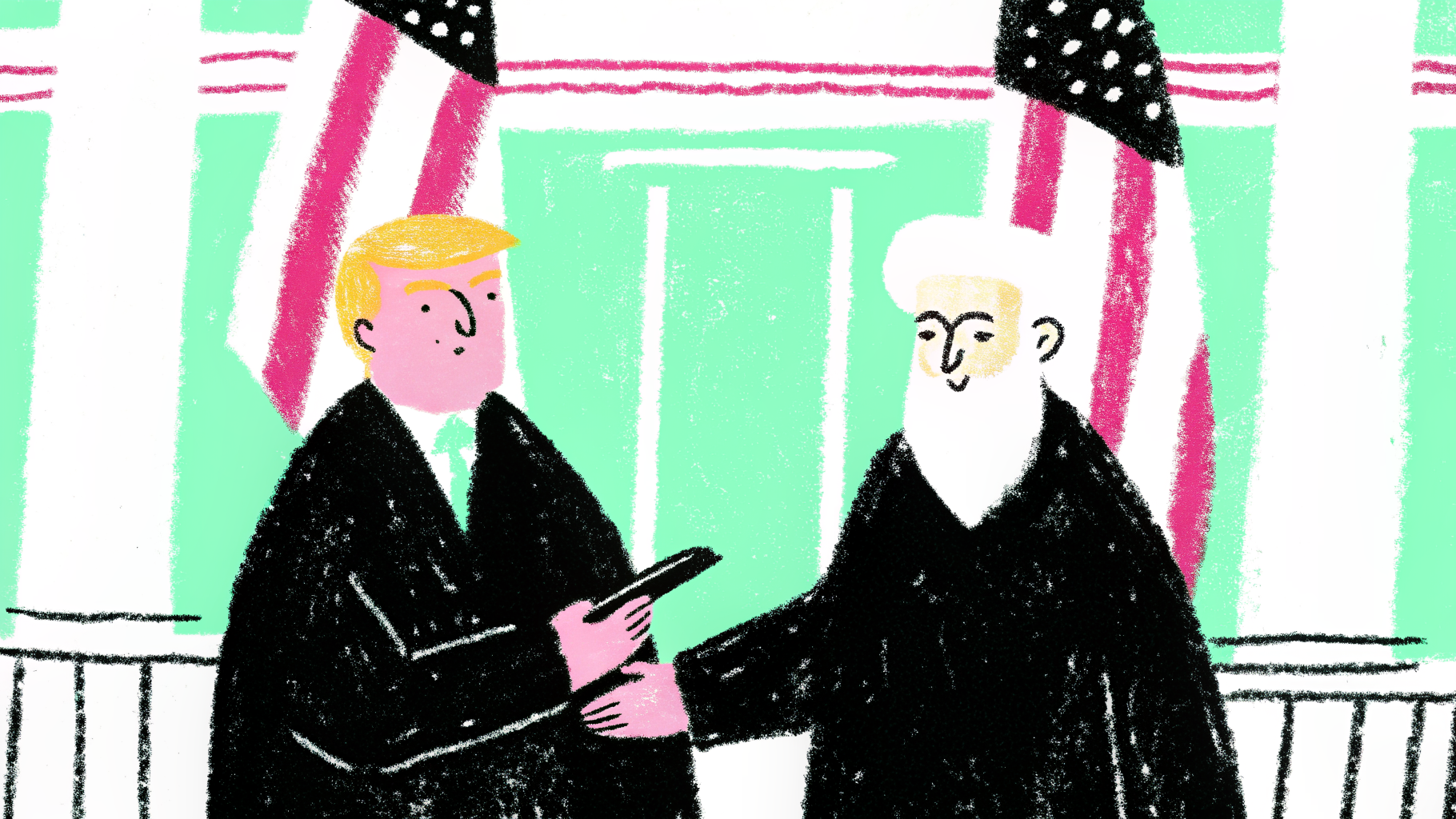
A preliminary between the United States and Iran has been finalized, ending over 100 days of hostilities and reopening the to restore global oil trade. The deal establishes a critical to reach a comprehensive peace agreement, contingent on Iran's commitment to halt nuclear weapons development while the US lifts its and allows immediate oil exports. Core issues of and remain tied to the final agreement, making this interim truce a fragile but essential step toward resolving decades of enmity and stabilizing the Middle East.
The U.S. military conducted strikes against Iranian targets near the on Friday in retaliation for an on a the previous day, marking the first major since the was signed.
The U.S. Navy and Air Force destroyed 20 IRGC targets, including Iranian missile and drone storage locations, coastal radar sites, air defense systems, and ground control stations near the Strait of Hormuz.
The strikes were a retaliatory counterattack ordered by President Trump in response to an Iranian drone strike that hit a commercial cargo vessel in the Strait of Hormuz the previous day.
The operation lasted just over four hours, beginning at 5 p.m. Eastern Time and concluding shortly after 9 p.m. ET, with Navy and Air Force jets completing the proportional assault.
Vice President JD Vance and Secretary of State Marco Rubio struck different tones regarding the Iran war and Israel, despite the administration's push for a united front, highlighting within the U.S. government.
Vance criticized Israeli strikes on Hezbollah in Beirut, calling civilian casualties unacceptable and warning escalation undermines diplomacy, while Rubio reaffirmed Israel's right to self-defense and took a hardline stance defending military actions without similar caveats.
Vance advocates moderation and skepticism of foreign wars, reflecting his past as a 'never-Trumper' who opposed starting wars in 2017-2021, whereas Rubio supports aggressive foreign policy and fully defended Trump's attack on Iran as necessary due to an imminent threat.
The internal divergence complicates the administration's push for a united front during the critical 60-day negotiating window, raising concerns that mixed messaging on Israel and Iran could weaken diplomatic leverage needed to secure a comprehensive peace agreement contingent on halting nuclear development.
Secretary of State Marco Rubio met with to reassure them that the U.S. is not excluding them from negotiations with Tehran, addressing regional fears about the peace deal's impact on their security.
Arab Gulf leaders feared the U.S. was excluding them from negotiations with Tehran, raising concerns about how the peace deal would impact their regional security .
The confirmed that the grants inspectors access to Iran's nuclear sites, clarifying the disputed inspection terms after conflicting remarks from both nations.
Access was disputed due to conflicting remarks from the U.S. and Iran regarding inspection terms, which the UN watchdog's confirmation resolved by validating the agreement's provisions .
Secretary of State Marco Rubio announced that Israel and Lebanon signed a '' concerning where Israel will hand control of occupied land to the Lebanese army, representing a new diplomatic step in the broader West Asia conflict.
Secretary of State Marco Rubio announced the agreement, confirming that the United States mediated the signing between Israel and Lebanon concerning the pilot zones .
President Trump declared that Iran's drone attack on a container ship in the was a 'foolish violation' of the , marking the first major breach of the interim peace deal since its signing.
The Iranian drone strike on a cargo ship disrupted a United Nations evacuation operation and jeopardized delicate peace talks that were progressing after the easing of U.S. sanctions .
President Trump stated that Iran shot at least four one-way attack drones at ships, with one hitting the upper deck of a large cargo ship while the U.S. knocked down three others .
This incident marks the first major breach of the interim peace deal since its signing, occurring just one week after the U.S. and Iran inked a 14-point memorandum to end their war .
attacked Lebanon while Prime Minister Netanyahu declared troops will remain in 'as long as necessary,' despite the .
Prime Minister Netanyahu declared Israeli troops will remain in occupied southern Lebanon 'as long as necessary,' despite the US-Iran interim peace deal. This order coincided with Israeli forces attacking Lebanon, showing the deal does not immediately halt all regional military actions.
Troops remain in southern Lebanon because Netanyahu views the occupation as necessary for Israel's security, independent of the US-Iran truce. The peace deal focuses on Iran's nuclear program and Strait of Hormuz access, not resolving Israel's conflicts with Lebanon or other regional actors.
and Secretary of State Marco Rubio struck different tones regarding the Iran war and Israel, despite the administration's push for a united front, highlighting .
Vice President JD Vance and Secretary of State Marco Rubio struck different tones regarding the Iran war and Israel, despite the administration's push for a united front. This highlights internal policy divergences on how to balance the US-Iran deal with Israel's security concerns.
The differing tones reflect internal administration disagreements on prioritizing the US-Iran interim peace deal versus maintaining strong support for Israel. While the administration seeks a united front, Vance and Rubio's contrasting approaches reveal divergent strategies for managing regional conflicts.
met with to reassure them that the US is not excluding them from negotiations with Tehran, addressing regional fears about the peace deal's impact on their security.
Secretary of State Marco Rubio met with Arab Gulf leaders to reassure them that the US is not excluding them from negotiations with Tehran. This addressed regional fears that the US-Iran peace deal might undermine their security interests in the Middle East.
Gulf leaders feared the US-Iran interim deal might exclude them from future negotiations with Tehran, potentially weakening their security position. Rubio's meeting aimed to confirm their inclusion in the diplomatic process and stabilize regional alliances amid the peace push.
The confirmed that the grants inspectors access to Iran's nuclear sites, clarifying the after conflicting remarks from both nations.
The interim peace agreement explicitly grants UN inspectors access to Iran's nuclear sites, resolving disputes after Iran previously denied access to bombed facilities and the US claimed inspectors would return. This access is mandatory for overseeing the downblending of enriched uranium reserves.
Conflicting remarks arose because Iran stated inspectors would not enter sites damaged by US and Israeli airstrikes last year, while US Vice President Vance called inspector returns a major milestone. The new agreement mandates oversight of all nuclear operations, requiring inspections regardless of facility damage.
Iran rejected a trapped in the Strait of Hormuz, blocking a plan supported by Oman. This action signals a new threat to , which is vital to the global economy.
Iran rejected a UN-backed proposal to free ships trapped in the Strait of Hormuz, blocking a plan supported by Oman. This action signals a new threat to free passage vital to the global economy, as the strait carries about 20% of world oil.
Iran's rejection blocks a UN-backed plan to free trapped ships, threatening free passage in the Strait of Hormuz. This waterway carries about 20% of the world's oil and gas, so disruptions directly impact global energy markets and trade stability.
The Senate failed to advance a Democratic attempt to pass an by a vote of 47-50, reversing its earlier support after President Trump met with Republican senators. This marks the second time the resolution has been rejected, undermining the .
The Senate reversed support after President Trump met with Republican senators, leading to the 47-50 vote rejection. This second rejection weakens legislative oversight on executive war powers, shifting authority back to the presidency during the conflict.
The suspended its from the Strait of Hormuz following the attack on a Singapore-flagged ship. The blocking of the proposal backed by Oman signals a new threat to free passage through the strait vital to the world economy.
Halting the plan means ships trapped in the Strait of Hormuz face continued risks without organized evacuation support. This blocking of Oman-backed proposals threatens free passage, a route critical for transporting about 20% of the world's oil.
struck a cargo ship near Oman in the on Thursday, testing the and complicating US-Iran negotiations. US officials confirmed Iran was behind the attack, which occurred hours after Tehran warned ships not to use unauthorized routes.
The attack tested the interim peace deal between the US and Iran, complicating ongoing negotiations. It occurred hours after Tehran warned ships against using unauthorized routes, signaling a deliberate challenge to the fragile truce.
Iran struck the ship to test the peace deal and assert control over the Strait of Hormuz. The Revolutionary Guard Corps fired after the vessel failed to respond to military demands, damaging the bridge but causing no injuries.
President Trump stated that Iran is meeting US demands but warned Washington will act if negotiations fail, while Tehran said it is proceeding 'with vigilance,' highlighting ongoing uncertainty in the .
President Trump stated that Iran is meeting US demands, yet he simultaneously warned that Washington will take action if the negotiations fail, underscoring the fragile nature of the current peace process.
In a late-night vote aimed at mollifying President Trump, rejected a against Iran, reversing their support from the previous day's vote that passed both chambers.
The resolution initially passed both chambers with Republican support, but Senate Republicans reversed course the next day in a late-night vote specifically to appease President Trump, effectively blocking the directive to end the war.
The asked Congress to approve , mostly for 'urgent needs' connected to the US war on Iran, just one day after Congress passed a resolution directing the president to end the war.
Roughly $67 billion of the requested $87.6 billion is earmarked for the Department of Defense to address war-related needs, including $21 billion for munitions, $17.3 billion for operational costs, and $21.1 billion for classified programs.
The White House requested the $87.6 billion just one day after Congress passed a resolution directing the president to end the war, citing 'urgent needs' connected to the ongoing conflict to replenish drained Pentagon accounts.
The Trump administration estimates the US war on Iran cost $11.3 billion in the first 6 days, while officials project $50 billion more may be required, making this $87.6 billion request a critical step to fund continued operations.
Following conflicting remarks from Iran and the US, the chief stated that will be inspected but the timing is 'not essential,' providing a neutral clarification on the disputed inspection terms.
The IAEA chief clarified that Iranian nuclear sites will be inspected but the timing is 'not essential,' providing a neutral stance to resolve conflicting remarks from Iran and the US regarding the disputed inspection terms.
The IAEA prioritizes the fact that inspections will occur to verify compliance with the halt on nuclear weapons development, viewing the specific schedule as secondary to the ultimate goal of ensuring no weapons are built.
rejected a new shipping lane through the announced without Tehran's coordination, warning that any vessel using the unauthorized route will be in danger.
The IRGC rejected a new shipping lane announced without Tehran's coordination, warning that any vessel using this unauthorized route will be in danger, as Iran currently controls all transit through a single vetted corridor.
Vessels must use the single IRGC-controlled corridor requiring specific clearance codes and an Iranian escort service, as no transits have been tracked on the 'normal' route since March 15.
prices fell to their lowest level since before the start of the on June 25, driven by rising supply expectations as tanker traffic resumes through the Strait of Hormuz following the interim peace deal.
Brent crude prices fell to their lowest level since before the US-Iran war started on June 25 because tanker traffic resumed through the Strait of Hormuz, increasing global supply expectations following the interim peace deal.
The resumption of tanker traffic through the Strait of Hormuz after the interim peace deal allowed oil exports to flow freely again, directly increasing supply and driving prices down to pre-war levels.
President Trump stated he was assured by Iran that no tolls will be charged at the , though Tehran has repeatedly referred to planned charges as '' rather than tolls, highlighting a continuing disagreement over the deal's terms.
Iran claims it will not charge 'tolls' but will collect 'maritime service fees' for navigation and security services, while the US insists the strait must be permanently toll-free, creating a continuing dispute over the deal's terms.
Iranian officials state that 'tolls' are illegal under maritime law for transit passage, but fees for specific services like navigation assistance and environmental protection are permissible, allowing them to charge without violating international norms.
Mahmood Sariolghalam of the states the war has reduced institutional rigidities in Iran, with the military now wielding unprecedented influence, indicating a lasting structural shift in West Asia geopolitics.
Mahmood Sariolghalam states the war reduced institutional rigidities in Iran, granting the military unprecedented influence. This structural shift indicates the military now holds greater decision-making power in geopolitics, potentially altering Iran's long-term domestic and foreign policy direction.
The war triggered a lasting structural shift where Iran's military gained unprecedented influence, reducing previous institutional constraints. This change could reshape West Asia geopolitics by strengthening military-led decision-making in Iran, affecting regional alliances and the balance of power with neighboring states.
The Iran war has exposed growing divergence between US and Israeli priorities, testing the limits of their longstanding alliance, as analysts note increasing fault lines in strategic approaches to the .
The war revealed growing divergence between US and Israeli priorities, testing their longstanding alliance. Analysts note increasing fault lines in strategic approaches to the West Asia conflict, suggesting the US may pursue different diplomatic or military goals than Israel in future regional engagements.
While the US focused on finalizing a peace deal with Iran to stabilize oil trade, Israel prioritized security concerns and nuclear containment. This mismatch in strategic approaches highlights how the US seeks broader regional stability, whereas Israel emphasizes immediate threat mitigation and military deterrence.
Mohammad Bagher Ghalibaf emphasized that the false image of US power and dominance has collapsed following the recent war, reinforcing Iran's stance that the peace deal reflects Iranian resistance and authority rather than coercion.
Iranian Parliament Speaker Ghalibaf argues the recent war exposed the falsity of US power, showing that the peace deal stems from Iranian resistance and authority rather than coercion. This view reinforces Iran's stance that it achieved the agreement through strength, not US military dominance.
Iran sees the deal as a validation of its resistance strategy, proving it can negotiate from a position of strength. The collapse of the 'false image' of US dominance suggests Iran believes it has shifted the regional power balance, reducing US leverage in future Middle East negotiations.
President Trump stated he was assured by Iran that no tolls will be charged at the , though Tehran has repeatedly referred to planned charges as '' rather than tolls, highlighting a continuing disagreement over the deal's terms.
The US insists on permanently toll-free passage, while Iran plans to charge 'maritime service fees' after the 60-day negotiation window. Iran argues these fees cover services like navigational support and insurance, whereas the US views any charge on an international waterway as illegal under international law.
Since mid-March, Iran's IRGC has required foreign vessels to pay fees for passage, reportedly up to $2 million per ship, payable in yuan or crypto. This 'tollbooth' system involves rigorous vetting before transit, though Iran officially labels these charges as service fees rather than tolls.
The war has cemented Iran's status as a major regional power, with lasting consequences for Middle Eastern geopolitics, serving as a lesson to the on standing up to Donald Trump.
Prime Minister Narendra Modi pitched for dialogue and diplomacy to restore peace in the West Asia region during a speech, assuring smooth supplies of oil, gas, and , marking India's official stance on the conflict.
India's official stance is to restore peace through dialogue and diplomacy, specifically urging de-escalation and the reopening of the Strait of Hormuz to ensure safe navigation and smooth supplies of oil, gas, and fertilizers.
Prime Minister Modi has held two rounds of telephone conversations with heads of state from most West Asian countries and maintains constant contact with Gulf nations, Iran, Israel, and the United States to discuss de-escalation.
The stated that the ongoing US-Israel and Iran war could shape the global economy in different ways, with inflation slowing to growth and the West Asia shock having lasting consequences for Middle Eastern geopolitics.
The International Monetary Fund (IMF) warns the ongoing US-Israel and Iran war could shape the global economy in different ways, with inflation slowing to growth. The West Asia shock is expected to have lasting consequences for Middle Eastern geopolitics, potentially disrupting oil trade through the Strait of Hormuz and impacting global energy markets.
US President Donald Trump is sending a delegation led by Vice-President JD Vance and other top officials to for direct talks with Iran aimed at easing West Asia tensions, marking a new phase of diplomatic engagement following the interim peace deal.
US President Donald Trump is sending a delegation led by Vice President JD Vance to Islamabad, Pakistan, for direct talks with Iran. This marks a new phase of diplomatic engagement following the interim peace deal, aiming to ease West Asia tensions and negotiate the final comprehensive agreement within the 60-day window.
US Secretary of State Marco Rubio asserted that a conclusive deal will prohibit Iran from imposing tolls in the , while US Vice President JD Vance claimed Iran agreed to allow back into the country, a claim immediately denied by Iranian officials, creating a public disagreement over the deal's terms.
US Vice President JD Vance claimed Iran agreed to allow international nuclear inspectors back into the country, but Iranian officials immediately denied this. Simultaneously, US Secretary of State Marco Rubio asserted the deal prohibits Iran from imposing tolls in the Strait of Hormuz, creating a public disagreement over whether inspections are permitted and if tolls are allowed.
Iranian officials, including , described the agreement with the U.S. to end the West Asia conflict as a 'declaration of America's defeat,' emphasizing that the deal was not the result of coercion and highlighting Iranian strength and resilience.
Iranian officials, including parliamentary speaker Mohammad Bagher Ghalibaf, claim the agreement reflects Iranian strength and resilience rather than coercion. They view the U.S. lifting its naval blockade and ending hostilities as a strategic surrender after over 100 days of conflict, framing the deal as a political defeat for Washington.
Oman announced it will keep the open to shipping without imposing any tolls and designated two north and south of the strait, reversing earlier discussions about charging and confirming free passage under the .
Oman designated two temporary maritime routes, one north and one south of the Strait of Hormuz, to keep the strait open for shipping without tolls, ensuring free passage for all vessels.
The U.S. Senate voted 50-48 to pass a directing President Trump to halt military operations against Iran or seek congressional authorization, marking the first time such a measure has cleared both chambers of Congress since the conflict began in . Four Republican senators joined Democrats in supporting the resolution, which is largely symbolic and does not require the president's signature.
The Senate passed the resolution with a 50-48 vote, marking the first time such a measure cleared both chambers since the conflict began in February 2026, with four Republican senators joining Democrats.
The resolution is largely symbolic because it does not require the president's signature and directs Trump to halt operations or seek authorization, but lacks immediate legal force to stop military actions against Iran.
President Donald Trump ordered the to investigate alleged '' by major oil companies early Wednesday, following the drop in oil prices below $77 per barrel, as he sought to address consumer fuel costs.
The investigation was ordered after oil prices dropped below $77 per barrel, prompting President Trump to address rising consumer fuel costs by targeting alleged price gouging by major oil companies.
Trump acted early Wednesday to directly address consumer fuel costs following the sharp drop in oil prices below $77 per barrel, signaling a shift to protect buyers despite lower global rates.
prices dropped below $77 per barrel on Tuesday due to increased tanker passage through the , marking a direct economic consequence of the US-Iran peace progress and easing of supply disruption fears.
Prices fell due to increased tanker traffic through the Strait of Hormuz, which reopened as part of the interim truce, signaling that global oil trade is being restored and reducing fears of supply shortages.
President Trump criticized the Senate's war powers vote as 'poorly timed' and 'meaningless' in a , asserting that Iran is on the ',' ready to fall, and willing to give the US practically anything, while claiming the vote aided the enemy.
Trump claimed the vote aided the enemy, while a White House representative later downplayed the resolution by stating it has no significance because hostilities ceased with the ceasefire on April 7th.
US Vice President JD Vance claimed Iran agreed to allow back into the country, while Iranian officials immediately denied making any new commitments regarding , creating a public disagreement over the deal's terms.
The disagreement threatens the fragile interim truce, as Iran's commitment to halt nuclear weapons development is a core condition for the US to lift its naval blockade and allow immediate oil exports.
The passed an act by a vote of 50-48 mandating the United States to either end its or seek congressional consent to continue fighting, marking a legislative check on .
The resolution passed with a narrow vote of 50-48, marking the first time the Senate has approved a war powers measure to block military action against Iran after nine previous failures.
This is the tenth time the Senate has addressed an Iran war powers measure this year, and it serves as a rare symbolic rebuke to President Trump, though it lacks legal force as a concurrent resolution.
The stipulates that the US on Iranian ports will be completely lifted within 30 days of the signing, contingent on the restoration of commercial shipping, providing further economic normalization.
The US naval blockade on Iranian ports will be completely lifted within 30 days of the MOU signing, provided commercial shipping is restored. This deadline, set for late July 2026, enables immediate oil exports and marks a key step toward economic normalization between the two nations.
The blockade lift is contingent on the restoration of commercial shipping through the Strait of Hormuz. Once this condition is met within the 30-day window, the US must lift its naval blockade, allowing Iran to resume oil exports globally and begin economic recovery.
The agreement includes a commitment by the US and regional allies to devise a for Iran, though the US is not obligated to contribute financially, leaving the burden on regional partners.
Regional partners and private investors will fund the $300 billion plan, as the US explicitly stated it will not contribute financially. The US will only provide licenses and sanctions exemptions, leaving the financial burden on Gulf states and foreign investors, though no nations have publicly confirmed backing yet.
The $300 billion plan will only be established and activated after a final comprehensive peace agreement is reached within the 60-day negotiating window. The implementation mechanism and specific contributors remain to be finalized during this period, contingent on Iran halting nuclear weapons development.
The signing triggered a , extendable by mutual consent, for the US and Iran to finalize a comprehensive peace deal, with and asset unfreezing contingent on Iran's compliance.
If the comprehensive deal is not reached within 60 days, sanctions relief and asset unfreezing remain tied to the final agreement, potentially leaving the interim truce fragile and unresolved.
Iran reaffirmed its commitment to pursue only civilian nuclear ambitions and agreed not to develop nuclear weapons, while agreeing to negotiate the future of its under a .
This commitment is a core condition for the US to lift its naval blockade and allow oil exports, making it essential for the interim truce to remain valid.
Both nations confirmed that the , a critical passage for 20% of global oil trade, would be open and toll-free starting Friday, marking the first tangible economic relief from the agreement.
Reopening the Strait of Hormuz restores access for 20% of global oil trade, marking the first tangible economic relief by making the passage toll-free starting Friday.
Both nations confirmed the Strait of Hormuz will be open and toll-free starting Friday, June 20, 2026, ending the blockade that had restricted commercial transit.
President Trump publicly announced the interim peace deal on Sunday evening, declaring that the US naval blockade on Iranian ports would be lifted and that Iran would receive a immediately.
President Trump announced the US naval blockade on Iranian ports would be lifted immediately, granting Iran a waiver to export oil without delay starting Sunday evening.
The blockade was lifted to enforce the interim peace deal, ending hostilities and allowing immediate oil exports as a core condition of the new Memorandum of Understanding.
The '' was formally signed in Versailles, France, by US President Trump and Iranian President Masoud Pezeshkian, establishing a permanent cessation of hostilities and a 60-day window for final negotiations.
The signed agreement establishes a 60-day window for final negotiations to reach a comprehensive peace agreement, contingent on Iran halting nuclear weapons development and the US lifting its blockade.
US and Iranian officials reached a preliminary to extend the ceasefire, reopen the Strait of Hormuz, and address the interlocking issues of Iran's nuclear program and American sanctions.
The MOU addresses the interlocking issues of Iran's nuclear program and American sanctions while committing to reopen the Strait of Hormuz and extend the existing ceasefire between the nations.
In April, the US and Iran announced a , halting immediate hostilities and creating a temporary pause that allowed both sides to explore diplomatic options and prepare for secret talks.
The fragile initial ceasefire halted immediate hostilities and created a temporary pause, allowing both sides to explore diplomatic options and prepare for secret talks to end the conflict.
The US and Iran announced the initial ceasefire in April 2026, marking the first major pause in the four-month conflict that had disrupted global oil trade.
On February 28, the United States and Israel launched military strikes against Iran, obstructing the and igniting a four-month conflict that disrupted global oil trade and set the stage for future diplomatic negotiations.
The strikes ignited a four-month conflict that obstructed the Strait of Hormuz and disrupted global oil trade, setting the stage for future diplomatic negotiations between the involved nations.
The United States and Israel launched the military strikes against Iran on February 28, 2026, directly obstructing the Strait of Hormuz and starting the regional hostilities.