
World
US and China turn AI access into a geopolitical choice
Countries must balance technology access, security ties, and digital sovereignty.
Countries must balance technology access, security ties, and digital sovereignty.
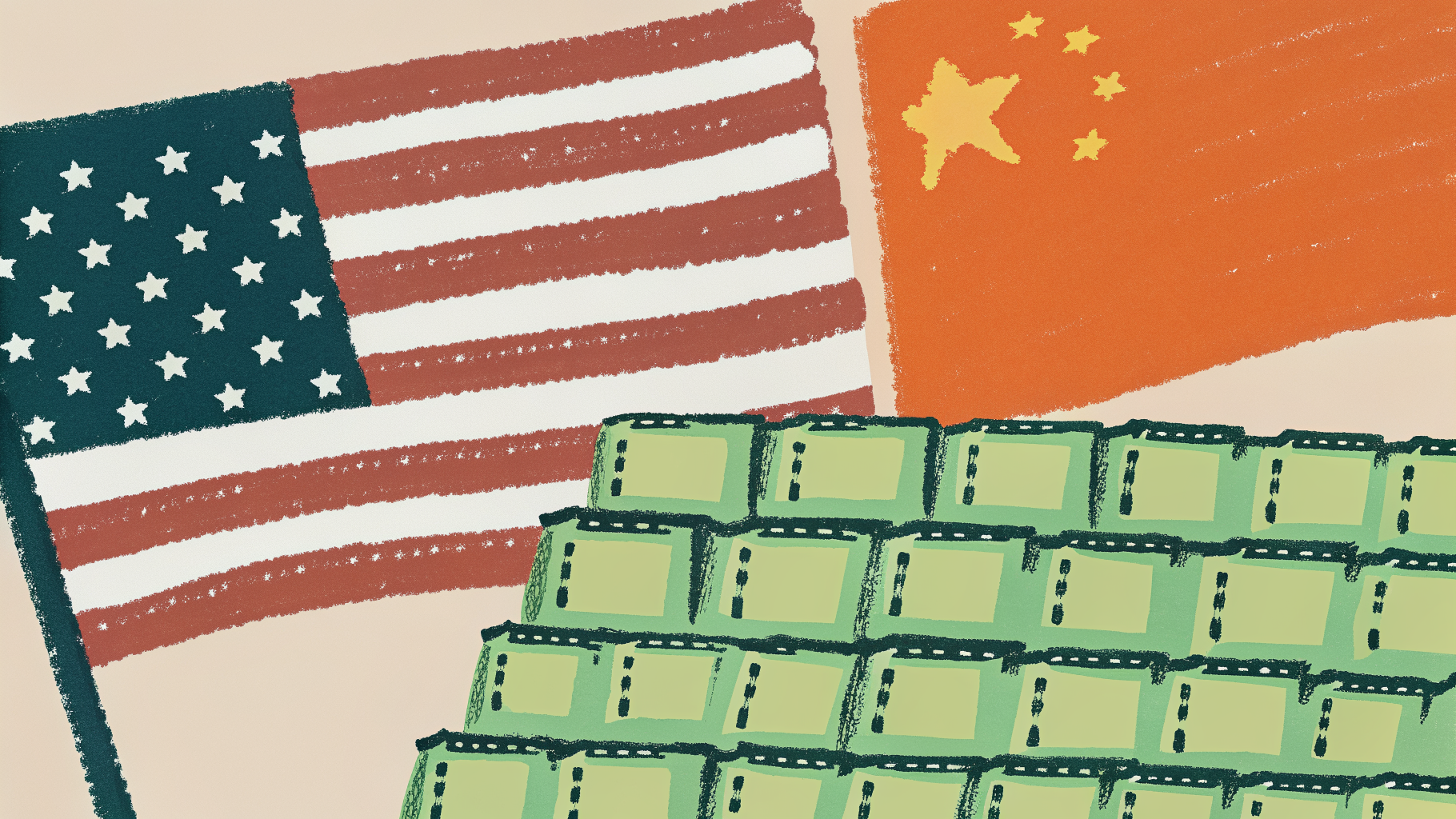
AI access is becoming a geopolitical choice, not just a technology decision. have limited China’s access to advanced chips, while Washington has tried to spread its own chips, cloud services, data centers, models and standards through trusted partners. China is building alternatives across the same layers, backed by its , the and . Its lower-cost models appeal to countries that cannot afford the most advanced US systems.
The United States briefly proposed dividing countries into tiers for AI access in January 2025, then withdrew the framework in May while keeping China-focused restrictions and promoting wider adoption of US infrastructure. Countries such as India want security ties and advanced technology from Washington without losing access to Chinese markets, infrastructure or models. They are investing in and models, but still depend on foreign chips and cloud capacity. The result is limited room for neutrality: governments may avoid formal alignment, yet their infrastructure, standards and cybersecurity choices can create lasting dependence on one ecosystem.
US controls on advanced chips and AI computing increased pressure on countries to navigate between and Chinese technology access. The available evidence supports balancing competing relationships, but not every specific claim about US and Chinese offerings or India.
By June 2025, US-China technology restrictions affected distinct parts of the , including , computing capacity, cloud access, and models. The available evidence supports separate technology dependencies but not the stronger claims about standards or political alignment.
The Commerce Department announced that it was rescinding the January diffusion framework two days before its scheduled implementation. It said the administration would pursue a different approach while retaining restrictions involving China and strengthening some overseas semiconductor controls. The reversal removed the proposed but did not end US efforts to limit China’s access to advanced AI technology.
Alongside the rescission announcement, the Commerce Department warned companies about the risks of using advanced Chinese computing chips, including products. It also imposed additional licensing requirements for some exports to Malaysia and Thailand after identifying concerns. The actions showed that Washington was moving toward targeted enforcement against Chinese hardware and suspected transshipment routes.
In May 2025, the Commerce Department initiated rescission of the Biden-era and said it would develop a replacement framework. Existing export controls, including restrictions involving China, remained in effect while the replacement was prepared.
In February 2025, the United States and India launched the to expand cooperation on artificial intelligence, semiconductors, quantum technology and other critical and emerging technologies, including plans for an AI infrastructure roadmap.
DeepSeek’s reported low training and usage costs intensified debate over the economics of advanced AI and whether necessarily required the most expensive US chips and proprietary services.
US export controls issued in January 2025 expanded restrictions to certain advanced AI model weights, adding model access to existing disputes over chips and related technology transfers.
India advanced domestic AI models, compute and public infrastructure through the , while its compute ecosystem continued to rely on globally sourced GPUs and international technology supply chains.
The proposed system drew concern because countries outside the most favored category could face , licensing requirements and restrictions on where computing capacity was hosted. Companies and governments worried that the framework could raise costs, limit cloud access and force choices between US security requirements and commercial ties with China. The debate showed that export controls could create friction not only with Beijing but also with Washington’s partners.
The divided countries into broad access categories and added controls for advanced computing capacity, cloud deployment and data-center transactions. The proposal sought to prevent diversion to China while giving trusted countries different levels of access to US AI hardware. It treated advanced chips and computing capacity as strategic assets whose destination could shape geopolitical alignment.
The Commerce Department added 140 Chinese entities to the and expanded controls on semiconductor manufacturing equipment and foreign-produced items. The package also restricted , a key component in advanced AI accelerators, and broadened rules covering technology produced outside the United States. The measures tightened pressure on China’s ability to obtain both chips and the components that make them useful for large-scale AI.
Beijing continued presenting AI governance as a development and sovereignty issue, emphasizing inclusive access, state control over data and opposition to unilateral technology restrictions. Chinese initiatives connected AI cooperation with , BRICS engagement, ASEAN relations and partnerships across Africa and other regions. The outreach combined standards diplomacy with opportunities to supply infrastructure, cloud services, models and training.
Premier Li Qiang announced the in the 2024 Government Work Report. The program promoted large-scale use of AI in manufacturing, services, public administration and consumer technology. China linked national AI strength not only to frontier models but also to deployment volume, industrial data and integration with existing digital infrastructure.
Washington updated the 2022 rules to cover additional advanced chips and more semiconductor equipment, including products designed to fall just below earlier thresholds. The changes also extended licensing requirements to more destinations and sought to reduce the possibility that restricted technology could reach China through intermediaries. Export controls became an ecosystem policy rather than a narrow ban on individual products.
Chinese government agencies and technology companies expanded efforts to replace restricted foreign components and services with domestic alternatives. The strategy covered semiconductor design and manufacturing, data centers, cloud computing, and sector-specific applications. Export controls increased the value of technological self-reliance while China’s large domestic market provided a deployment base.
The Commerce Department imposed sweeping controls on advanced computing chips, semiconductor manufacturing equipment and related support for China. The rules targeted the high-performance hardware needed to train and run . They marked a shift from ordinary technology competition toward direct limits on China’s ability to build advanced AI capacity.
The established a federal structure for coordinating AI research, education, testing and standards. The measure supported national research institutes and aimed to expand access to talent and computing resources. Washington’s approach increasingly combined private-sector innovation with government-backed infrastructure and security priorities.
The White House directed federal agencies to strengthen AI research, standards, workforce development and access to government data and computing resources. The order moved Washington toward a coordinated national AI policy while leaving much of implementation to universities and private companies. It also framed AI leadership as a matter of economic and national security.
China’s State Council released its , setting goals for leadership in AI theory, technology and applications by 2030. The plan linked AI to national security, economic development, industrial modernization and state-supported research. It established the policy foundation for China’s later push across chips, cloud capacity, models and applications.