
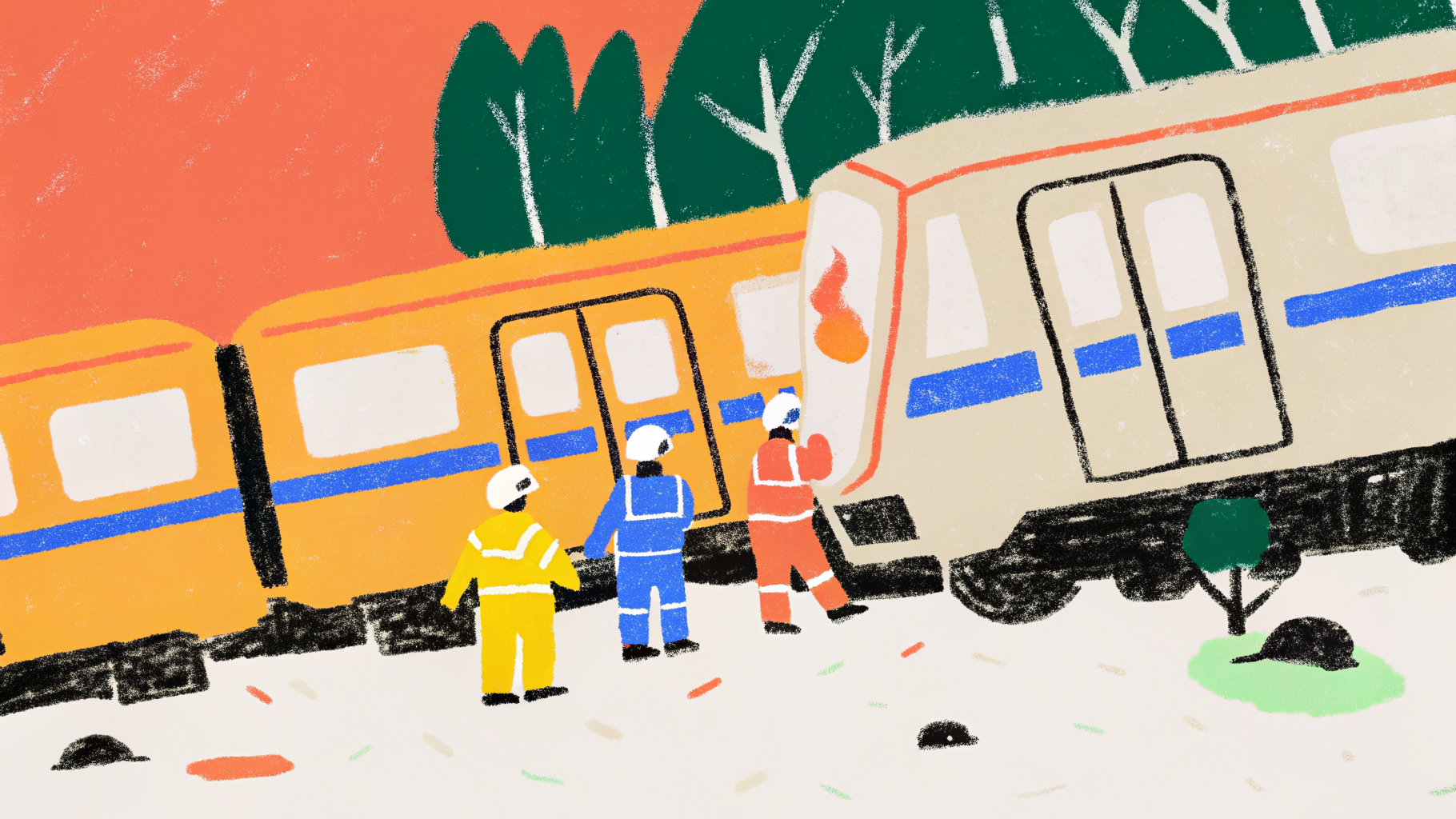
Spain investigates deadly Renfe and Iryo train collision
The crash exposes unresolved safety risks on Spain’s high-speed railways
Overview
At least 46 people died and dozens were injured on October 28 when a high-speed train hit the back of an train near Urda, Mora and Orgaz in Toledo province. Both trains were traveling from Madrid to Seville and carried 544 passengers. Two carriages fell down an embankment, making rescue harder. Crews searched the wreckage, and rail services stopped. The death and injury figures changed as the rescue continued, and media reports sometimes differed from official figures. The cause is not known. Unconfirmed reports point to a signaling or failure, a control-center decision to let the train proceed, or driver error. Investigators will examine train speeds, instructions, track use and safety systems. An and a are investigating. The crash follows a fatal January collision involving and near , increasing pressure to find out whether Spain’s high-speed rail network has safety weaknesses.
Timeline
Investigators examine signaling and dispatch decisions after the collision
Investigators examined whether a signaling malfunction and an incorrect dispatch decision allowed the Renfe train to collide with the stopped Iryo train. Early reports identified possible human error and signaling failure, while the definitive cause and the performance of remained unconfirmed.
The Orgaz judicial district takes charge of the crash investigation
The judicial district in Orgaz, Toledo, was reported to be responsible for the judicial investigation. Separate technical inquiries into the collision were also underway, but the available reports did not confirm every listed investigative detail.
Preliminary reports examine signaling problems and possible dispatch errors
Early reports attributed the suspected sequence to a possible and , while also examining whether an authorized the Renfe train to proceed. These explanations remained unconfirmed pending investigation.
Officials say the collision cause remains unknown
Authorities confirmed the basic sequence, a Renfe train hitting the rear of an Iryo train, but said they had not established why both trains occupied the . Early casualty reports and descriptions of whether the Iryo train was stopped or moving were still developing. Responsibility had not been assigned.
Authorities raise the death toll from 10 as rescuers search the wreckage
Officials initially reported at least 10 deaths and warned that the number would rise as rescuers entered the wreckage. Later regional-government and emergency-service reports placed the toll at at least 30, while some media reports cited 39 or 46 deaths and roughly 100 to 120 injuries. The figures remained provisional and were not all officially confirmed.
Emergency crews launch a large rescue operation after the trains collide
Firefighters, emergency medical teams and other responders reached the wreckage and began extracting passengers from the damaged trains. The derailed carriages and their position beside the track made access and rescue difficult. Rail services on the affected route were suspended or severely disrupted while the response continued.
A Renfe train strikes the rear of an Iryo train near Urda and derails its carriages
At about 8:54 a.m., the Renfe train collided with the rear of the Iryo train between Urda, Mora and Orgaz in Toledo province. Initial reports described the Iryo train as stopped or moving slowly. Two Iryo carriages derailed and fell down an .
Renfe and Iryo trains carrying 544 passengers begin Madrid-to-Seville journeys
The two high-speed trains were traveling south from Madrid toward Seville on the . Renfe carried 397 passengers and Iryo carried 147, including one infant. The trains were later involved in a collision near kilometer 118 in Toledo province.
A January Adamuz rail disaster kills 46 people and raises safety concerns
A January 2026 disaster near Adamuz in Córdoba killed 46 people after an train derailed and a train struck the derailed cars. The crash prompted renewed debate about railway safety on the broader Madrid-Andalusia corridor.