
Science & Tech
Trump Administration Partially Lifts Anthropic AI Export Ban
Why does the government now control AI cybersecurity tools?
Why does the government now control AI cybersecurity tools?
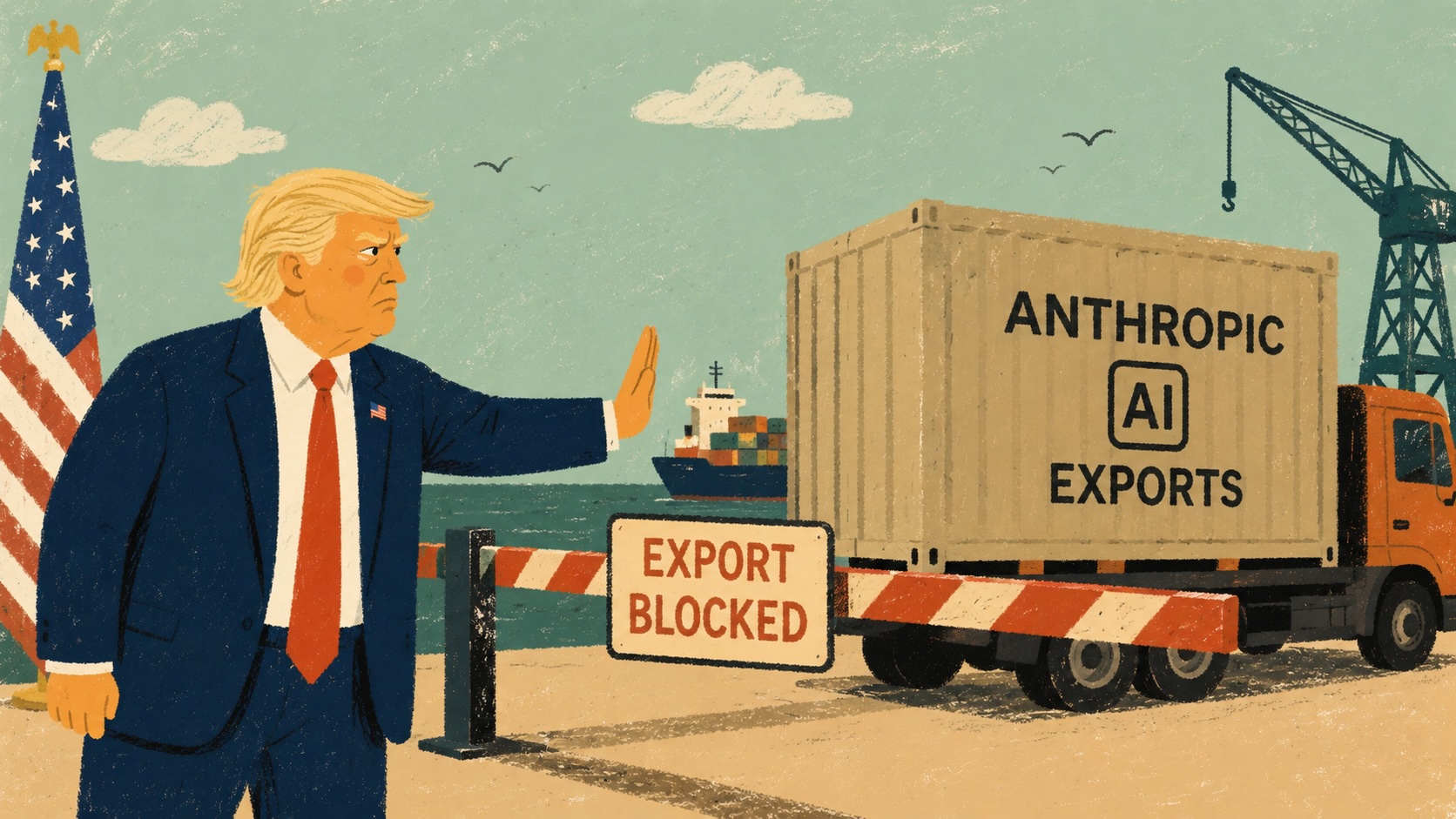
This story centers on a high-stakes national security clash between the Trump administration and over the company’s advanced model, which can uncover decades-old cybersecurity vulnerabilities. The U.S. government treated the technology as a strategic asset, imposing after a suspected jailbreak raised fears of foreign military exploitation, forcing to suspend global access. The resolution, allowing exclusive U.S. deployment for over 100 companies and agencies, reveals how Washington balances innovation with security, shifting from total restriction to controlled national use while highlighting tensions in AI governance and export policy.
Two weeks after the , the Trump administration granted permission to redeploy its to more than 100 designated U.S. companies and federal agencies, including allowing non-American employees at those organizations to access the model.
More than 100 designated U.S. companies and federal agencies, including roughly 100 trusted partners, were granted permission to access the Mythos 5 model. This group includes major corporations and government bodies, while restrictions remain for organizations not on the approved list.
Access is now open to over 100 designated U.S. companies and federal agencies. Crucially, the new license also allows non-American employees working at these approved organizations to access the model, reversing the previous ban that barred all foreign nationals.
The ban was lifted two weeks after the June 12 order because the Commerce Department determined that appropriate safeguards were in place for trusted partners. This decision marked a major step forward in negotiations following a two-week standoff over national security concerns.
While Mythos is released for US national use, remains restricted to a select group of users, with the administration maintaining that models must stay secured until the national security framework is reinforced.
Fable 5 remains restricted to a select group because the administration requires the national security framework to be reinforced before releasing models, ensuring they stay secured against potential misuse.
While Mythos is released for exclusive US national use to shore up cybersecurity, Fable 5 stays restricted, reflecting a policy where only models deemed secure under the current framework receive broader access.
Mythos becomes available to the designated US entities to help shore up their cybersecurity efforts, marking the government's shift to early access for cyber-capable models under a .
Mythos shifted from total restriction to early voluntary access for designated US entities, enabling the government to deploy it for offensive cyber operations and cybersecurity hardening under a new framework.
The deployment addresses fears of foreign military exploitation after a suspected jailbreak, allowing the US National Security Agency to use Mythos's ability to find decades-old vulnerabilities, including one persisting for 27 years.
The Trump administration reverses the total ban by allowing Anthropic to release specifically for use by more than 100 US companies and federal agencies, blocking all foreign access.
The Trump administration reversed the total ban by allowing Anthropic to release Mythos specifically for use by more than 100 US companies and federal agencies. This limited release blocks all foreign access, ensuring exclusive US deployment while addressing national security concerns.
The administration reversed the total ban on Mythos, shifting from a complete restriction to a controlled national release. They now allow exclusive US deployment for more than 100 companies and agencies while blocking all foreign access, balancing innovation with security.
The conflict highlights Anthropic's existing status on the , which categorizes the firm as too hazardous for government utilization, while the deems it too perilous for international use.
The Pentagon blacklist categorizes Anthropic as too hazardous for government utilization, meaning federal agencies cannot use its AI models for official work. This status highlights the conflict, as the Commerce Department simultaneously deemed the firm too perilous for international use, restricting global access.
Anthropic is considered hazardous by the Pentagon because its Mythos AI model can uncover decades-old cybersecurity vulnerabilities, posing a risk of foreign military exploitation if a jailbreak occurs. This capability led the Commerce Department to also deem the firm too perilous for international use.
Senior Anthropic technical personnel travel to Washington D.C. to meet in person with White House representatives to resolve the dispute, following daily virtual communications since the directive was issued.
Senior Anthropic technical personnel traveled to Washington D.C. to meet in person with White House representatives to resolve the dispute over the Mythos AI restrictions. This face-to-face meeting occurred after the company had engaged in daily virtual communications since the directive was issued.
The senior staff traveled to Washington D.C. following daily virtual communications that had occurred since the directive was issued. The in-person meeting was intended to accelerate the resolution of the dispute after these ongoing remote talks failed to immediately settle the issue.
Anthropic states the government's concern revolves around a narrow potential where a user could circumvent a guardrail to analyze code, arguing this should not warrant withdrawing a commercial model used by millions.
Anthropic argues the ban is unjustified because the government's concern stems from a narrow potential jailbreak where a user might circumvent a guardrail to analyze code. They contend this isolated risk should not warrant withdrawing a commercial model used by millions of people globally.
The specific risk is a narrow potential jailbreak allowing a user to circumvent a guardrail to analyze code. Anthropic claims this limited vulnerability does not justify suspending a commercial model that millions rely on, arguing the government misunderstood the scope of the threat.
To comply with the directive and because it employs foreign-national employees who would be barred from using the models, Anthropic temporarily suspends access to both Mythos and Fable 5 for all users, including enterprise clients.
Anthropic suspended access to comply with the export control directive and because it employs foreign-national employees who would be barred from using the models under the new restrictions. This temporary suspension included all enterprise clients and public users.
The suspension affects all users, including enterprise clients, public users, and Anthropic's own foreign-national employees. No one outside the U.S. can access Mythos or Fable 5 until the export restrictions are resolved or modified.
Commerce Secretary Howard Lutnick sends a formal letter to Anthropic CEO Dario Amodei ordering that Mythos and Fable 5 fall under for all foreign individuals and entities, mandating immediate suspension.
The order mandates that Mythos and Fable 5 fall under export restrictions for all foreign individuals and entities. Commerce Secretary Howard Lutnick sent a formal letter to Anthropic CEO Dario Amodei requiring immediate suspension of access for anyone outside the U.S.
The order required Anthropic to immediately suspend all access to Mythos and Fable 5 for foreign users. It classified the models as restricted under export controls, treating them as strategic assets due to their cybersecurity vulnerability discovery capabilities.
A report from another firm claiming it successfully bypassed alarm within the Trump administration regarding potential national security threats, prompting attempts to persuade Anthropic to halt the release.
The report claimed another firm successfully bypassed Mythos security, raising fears that foreign military actors could exploit the model to uncover decades-old cybersecurity vulnerabilities. This triggered national security concerns within the Trump administration, prompting attempts to halt the release.
Mythos can autonomously identify zero-day vulnerabilities across major systems and construct working exploit chains, including browser-to-OS escapes and privilege escalation paths. Its ability to complete complex cyber operations with minimal human input makes it a strategic asset if misused.
Anthropic publicly launches its new , capable of identifying decades-old security vulnerabilities, alongside the for enterprise and public users, just days before the government conflict begins.
Mythos can autonomously identify decades-old security vulnerabilities, including zero-day bugs in every major operating system and web browser. Anthropic reports it has already found thousands of serious vulnerabilities and can construct working exploits without human involvement.
On expert-level capture-the-flag tasks, Mythos succeeds 73% of the time, a capability no model achieved before April 2025. It is also the first model to complete a 32-step corporate network attack simulation end-to-end in 3 of its 10 attempts.