
World
Supertanker fire intensifies dispute over control of Strait of Hormuz
Competing military claims make safe passage harder for commercial ships
Competing military claims make safe passage harder for commercial ships
The incidents reflect a wider fight over who can keep ships safe in the . The narrow route is vital for oil shipments, Asian importers and global energy prices. US forces said they had reopened shipping lanes after removing . Iran warns that ships that turn off or use routes it has not approved could be treated as hostile. Further attacks could make tankers wait, seek or take longer routes. That would raise insurance, shipping and crude oil costs. The biggest danger is a wider conflict involving Iran, the United States and regional partners. Conflicting claims make the threat’s full size unclear.
Unverified Iranian mine claims and confirmed reports of projectile damage heightened uncertainty for vessels using the strait, while reported traffic remained about 70% to 75% below . The incidents raised concerns about further delays and disruption, but their effects on insurance, freight and crude costs, escorts, and regional escalation remained uncertain.
Iran portrayed the tanker and container-ship incidents as enforcement against vessels using routes it considered unauthorized. said the United States and regional partners controlled the strait and that commercial traffic was still moving, deepening the dispute over and military deterrence.
Singapore reported that was struck by an unknown projectile and later sank, while Iran said the vessel hit a . The available evidence did not independently verify the more specific attribution to an projectile or the additional claims about towing, mine-free routes, and continued transits.
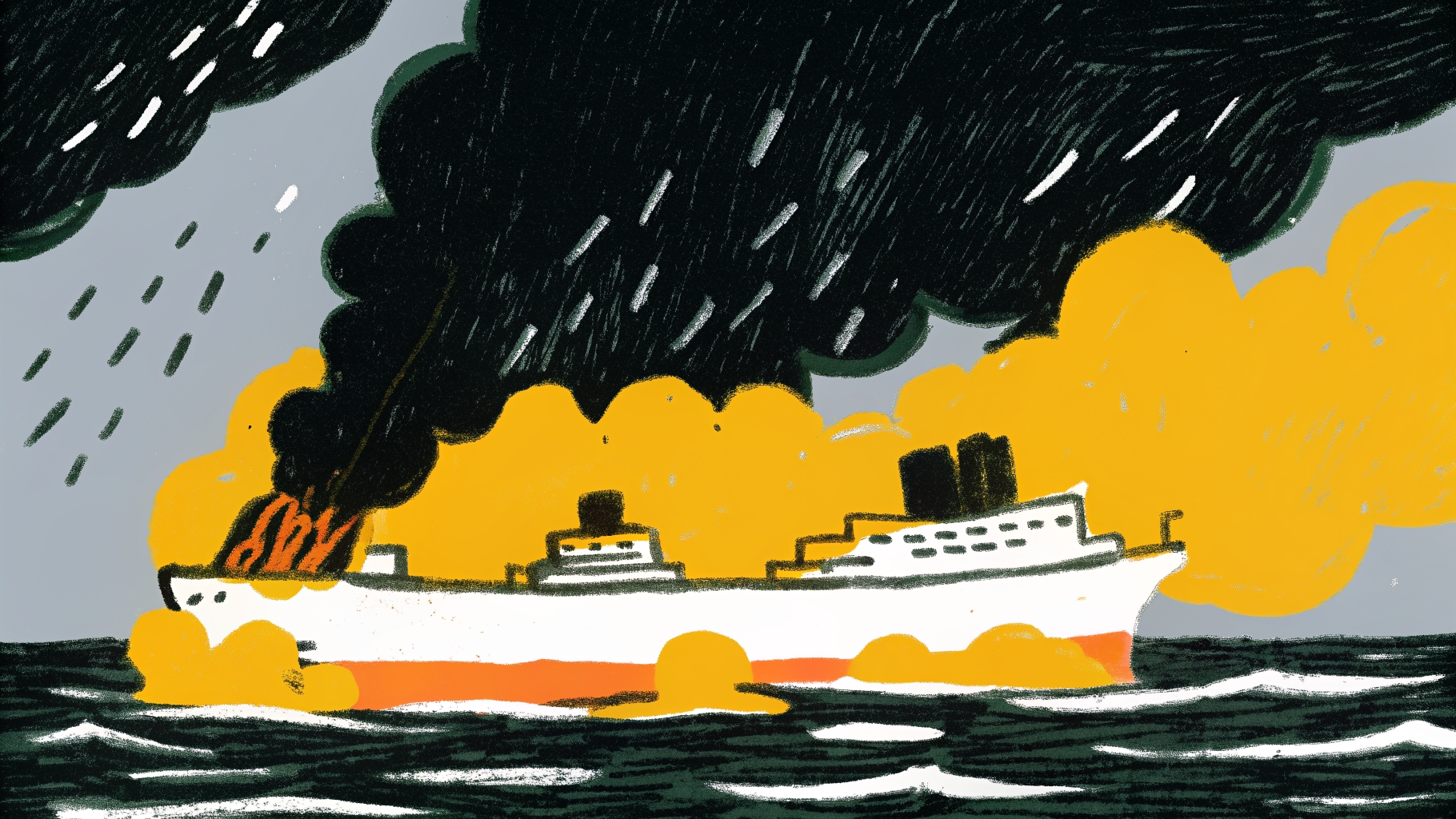
The IRGC said the unnamed hit a naval mine in its and caught fire while carrying more than two million barrels of crude. Iran alleged that the tanker had disabled its navigation system and was using an unauthorized route, but no independent reporting confirmed the tanker’s identity, flag, location, damage or casualties.
The IRGC Navy said another vessel had hit a mine and presented the incidents as evidence of ships entering a . The claims were not independently verified, leaving the number of mine strikes and the condition of the affected vessels uncertain.
The said 22 Asian crew members were rescued after an oil tanker caught fire. Available reporting did not confirm the vessel’s identity or establish that it was the same tanker described in Iran’s mine-strike claim.
said was struck by an unknown projectile, caught fire and later sank. All 21 crew members were safely evacuated. Iran attributed the sinking to a naval mine, while the cause remained disputed.
The said vessels switching off navigation and tracking systems while transiting the strait would be classified as hostile. Iran also accused some ships of using unauthorized routes, claims that were not independently verified.
said international shipping lanes in the had reopened after US forces removed Iranian . The announcement established a contested security environment in which mine clearance, designated routes and military control directly affected commercial traffic.