
Supreme Court orders NCR vehicle plans as Delhi smog returns and Kharge demands clean-air rights
Clean air access increasingly depends on coordinated government enforcement
Overview
’s air worsened after Diwali. The citywide was near 400, while some areas reached the severe level. Weather that holds pollution near the ground combined with vehicle fumes, fireworks, industry, dust and crop burning. Stubble-burning cases had fallen. Construction limits, diesel-generator restrictions, firecracker rules and emergency steps still failed to prevent another dangerous episode.
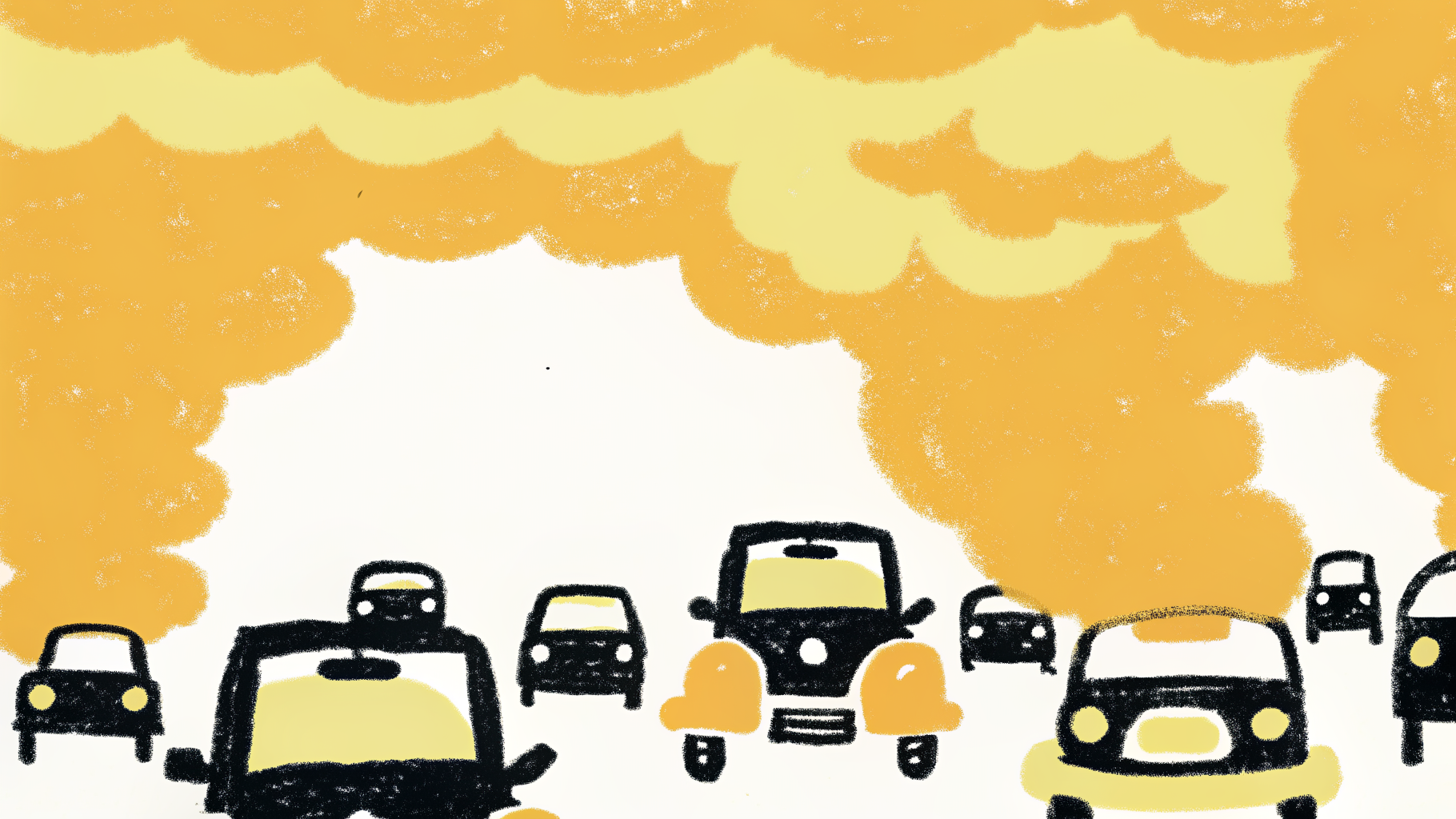
The Supreme Court is pressing Delhi, Uttar Pradesh, Haryana and Rajasthan to submit short- and long-term plans to cut vehicle pollution. It wants government agencies and police to find and restrict , enforce and control vehicles crossing state borders. Congress president Mallikarjun Kharge says scattered measures and weak funding have failed. He says clean air is a fundamental right. The next hearing will show whether governments offer funded deadlines, checks and penalties instead of seasonal promises.
Timeline
The Supreme Court will review four governments’ plans to curb vehicle pollution
The case is scheduled for its next hearing on November 23. The Supreme Court has asked Delhi, Uttar Pradesh, Haryana and Rajasthan to submit detailed responses on measures to regulate polluting and , enforce emission and requirements, coordinate inter-state regulation, and strengthen enforcement.
Seasonal restrictions failed to prevent another severe post-Diwali pollution episode
Firecracker time limits, construction restrictions, diesel-generator controls and emergency measures were active as air quality worsened. The recurrence exposed the limits of short-duration interventions when emissions from traffic, industry, dust and neighbouring states continue across administrative boundaries.
Kharge criticized the government's response to Delhi's pollution crisis
Kharge's criticism expanded the episode into a political dispute over the government's handling of air pollution and the effectiveness of existing measures.
Mallikarjun Kharge criticized the government for relying on piecemeal pollution measures
Congress president Mallikarjun Kharge challenged the adequacy of the government's response as Delhi's air quality deteriorated after Diwali. He argued that fragmented interventions were insufficient and said access to clean air should be treated as a .
The Supreme Court shifted attention from festival spikes toward year-round vehicle controls
The court's directions moved the recurring winter-pollution debate beyond firecracker restrictions and other temporary measures. The requested plans must address immediate, medium-term and long-term controls, raising questions about common standards, data sharing, inspections, penalties, funding and enforceable deadlines across state borders.
The Supreme Court included Delhi Police and the municipal corporation in enforcement reporting
The and Delhi Police were included alongside the four governments in the court's directions. Their roles are linked to local inspections, traffic enforcement, restrictions on polluting activity, road management and identifying vehicles operating without required compliance.
The Supreme Court put Pollution Under Control certification enforcement under review
The four governments were ordered to explain how they identify and regulate vehicles without valid compliance documentation. The court specifically sought information on how is checked, monitored and enforced against vehicles that exceed emission standards.
The Supreme Court demanded controls on over-age and non-compliant vehicles entering the NCR
The bench sought details on how authorities prevent over-age vehicles and vehicles failing prescribed emission standards from entering or operating in the region. Its questions covered vehicle identification, monitoring, roadworthiness and the practical enforcement of entry and operating restrictions.
The Supreme Court ordered four governments to submit vehicle-pollution action plans
The court directed Delhi, Uttar Pradesh, Haryana and Rajasthan to report existing and proposed short-term and long-term measures to reduce vehicular emissions. Coordinated action is required because vehicles registered outside Delhi routinely enter and operate across the interconnected .
Delhi pollution forecasts showed transport contributing more than stubble burning around Diwali
Forecasts cited in reporting estimated a substantially larger contribution from transport than from around November 8. The comparison supported greater attention to vehicle emissions, but the precise percentages and any direct link to the court's reasoning are not firmly established.
Post-Diwali smog left Delhi in the very poor category, with severe readings at several stations
On November 9, Delhi's overall was reported at 376, in the very poor category, while at least 15 monitoring stations recorded readings above 400. The episode was associated with and accumulated pollution after Diwali.
Delhi recorded severe air quality at 20 monitoring stations on Diwali night
Air quality reached the at 20 of Delhi's 59 despite restrictions on firecracker use. Officials and forecasters attributed the deterioration to firecrackers, vehicle emissions, unfavourable weather and pollution transported from surrounding areas.
Delhi-NCR allowed certified green firecrackers during restricted festival hours
The Supreme Court permitted certified during limited windows, from 6 am to 7 am and from 8 pm to 10 pm on November 7 and 8. The decision came as authorities tried to balance festival celebrations with recurring pollution concerns.
CAQM invoked Stage III GRAP measures as Delhi air quality worsened
On November 6, invoked across Delhi-NCR after Delhi recorded a daily average AQI of 382 in the very poor category. The order added restrictions on construction, dust-generating activity and other pollution sources.
The Supreme Court identified vehicular emissions as a major Delhi-NCR pollution source
During a , the court said levels were already approaching 400 and expressed concern about bumper-to-bumper traffic across Delhi and neighbouring NCR areas. The bench said vehicle pollution required immediate, medium-term and long-term action, rather than only seasonal responses.