
Business & Economy
SpaceX falls for third day, erases $600 billion in market value
Analysts warn SpaceX IPO may crash 40% due to negative
Analysts warn SpaceX IPO may crash 40% due to negative
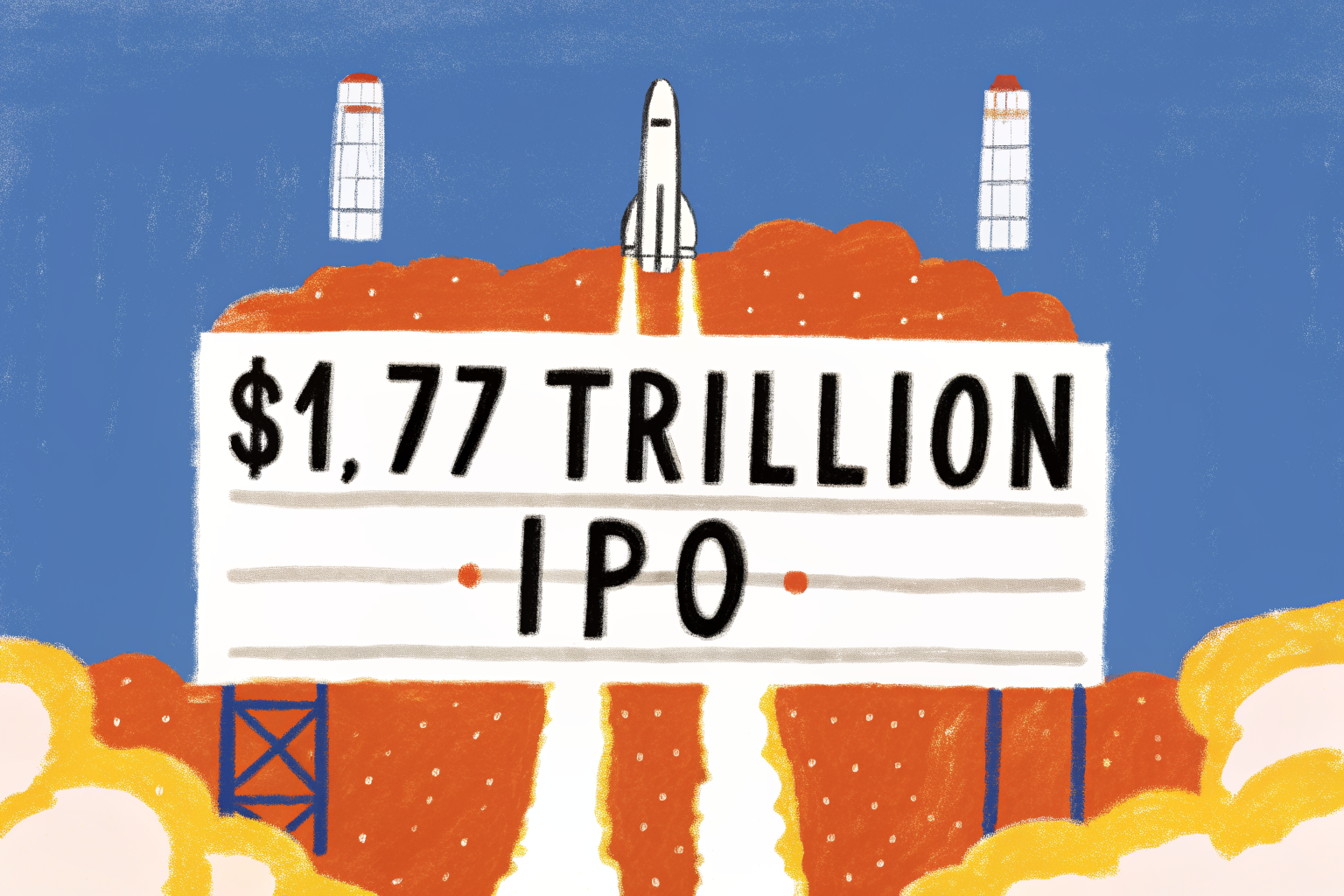
SpaceX's historic $1.77 trillion IPO marks the largest public offering in history, yet analysts warn of a potential 40-50% crash within 12 months due to negative earnings, , and exclusion from major indices like the S&P 500. The story reveals how record valuation clashes with financial fundamentals and market mechanics, creating immediate volatility risks despite the company's $75 billion capital raise. Investors face a critical tension between SpaceX's transformative potential and the high stakes of its overvalued entry into public markets.
As of June 23, 2026, concerns that the Fed may raise interest rates in 2026 have intensified crash fears. Analysts predict an additional price drop if rates increase, compounding the risks from the company's and .
As of June 23, 2026, fears intensified that a Fed rate hike in 2026 could trigger an additional price drop. Higher rates compound existing risks from negative earnings and insider selling pressure, potentially accelerating the predicted crash.
Crash fears are intensifying because concerns about a 2026 Fed rate hike have grown. Analysts predict this policy shift would add downward pressure to the stock, worsening the impact of the company's negative earnings and insider selling.
By late June 2026, analysts warned of a potential 40-50% crash within 12 months due to negative earnings, , and . Some predicted a collapse on if the Federal Reserve raises interest rates.
Analysts warned in late June 2026 of a potential 40-50% crash within 12 months. This severe drop is driven by negative earnings, staggered insider stock unlocks, and the company's exclusion from major indices like the S&P 500.
Some analysts predicted a collapse could occur on Day 1 if the Federal Reserve raises interest rates. Higher rates would increase borrowing costs and reduce the present value of future earnings, compounding risks from negative financials.
By mid-June 2026, it was confirmed that SpaceX would not be fast-tracked into the . Earliest inclusion is possible in mid-2027 only after four quarters of positive , eliminating expected index fund demand and increasing volatility risks.
SpaceX cannot join the S&P 500 until mid-2027 at the earliest. Inclusion requires four consecutive quarters of positive GAAP earnings, a condition the company has not yet met, eliminating expected index fund demand.
Exclusion from the S&P 500 prevents automatic buying by index funds, which typically provide stable demand. Without this support, SpaceX faces higher volatility risks as its price relies solely on active investor sentiment rather than passive inflows.
SpaceX closed its first trading day on June 12, 2026, at $161.11, up . The valuation surged to $2.1 trillion with 360 million shares traded, a volume 10 times higher than .
SpaceX closed its first trading day on June 12, 2026, at $161.11, which is 19% higher than the IPO price of $135. This surge pushed the company's valuation to $2.1 trillion with 360 million shares traded.
Trading volume reached 360 million shares on Day 1, a figure 10 times higher than the volume seen during Cerebras' 2026 IPO debut. This massive activity highlights unprecedented investor demand for SpaceX shares.
On June 11, 2026, SpaceX priced its IPO at $135 per share for , raising $75 billion. This transaction valued the company at $1.77 trillion, officially becoming the largest IPO in stock market history.
SpaceX announced a of $135 on June 3, 2026, breaking Wall Street norms by pricing a week early. The offering aims to raise $75 billion, valuing the company at $1.75 trillion and positioning it among the ten most valuable U.S. listed firms.
The offering aims to raise $75 billion, valuing the company at $1.75 trillion. By pricing a week early at $135 per share, SpaceX broke Wall Street norms and positioned itself among the ten most valuable U.S. listed firms.
On May 20, 2026, SpaceX released its publicly, revealing $18.67 billion in 2025 revenue anchored by profitable . The filing disclosed a $4.94 billion net loss driven by AI investments, highlighting the financial risks behind the record valuation.
The filing disclosed a $4.94 billion net loss driven primarily by AI investments. While the company generated $18.67 billion in 2025 revenue anchored by profitable Starlink, these heavy AI spending costs highlighted the financial risks behind the record valuation.
SpaceX filed a on April 1, 2026, initiating the for the largest U.S. equity issuance in history. The company targeted a valuation of $1.75 trillion, signaling active preparation for a potential mid-2026 public debut.
SpaceX targeted a valuation of $1.75 trillion when it filed its confidential draft registration on April 1, 2026. This figure signaled active preparation for the largest U.S. equity issuance in history, with a potential public debut planned for mid-2026.