
Business & Economy
Rupee Hits Record Low Near 95.33 Per Dollar
Brent crude spikes to 126 per barrel while foreign investors pull over 20 billion dollars from Indian markets in weeks.
Brent crude spikes to 126 per barrel while foreign investors pull over 20 billion dollars from Indian markets in weeks.
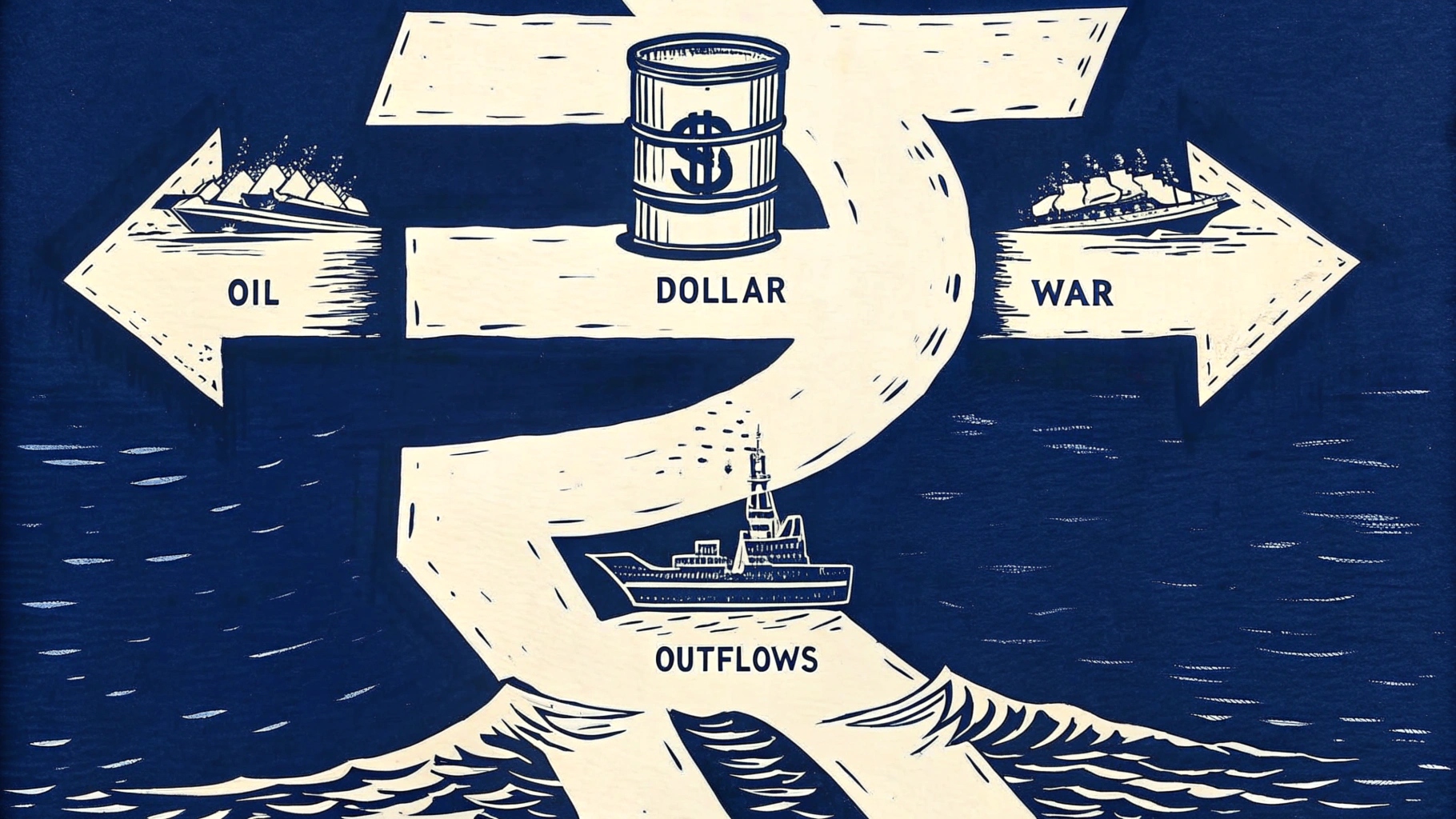
India's rupee has collapsed to record lows as the country faces a perfect storm of external shocks. Geopolitical tensions in West Asia have sent oil prices soaring above $120 per barrel, forcing India to spend more dollars on critical energy imports. Simultaneously, foreign investors have pulled over $20 billion from Indian markets in recent weeks, converting rupees to dollars and accelerating currency depreciation. A stronger US dollar, driven by elevated Federal Reserve rates, has made less attractive globally. The rupee's 11% annual decline is its worst in over a decade, threatening to import inflation and complicating the central bank's policy choices as it tries to defend the currency while supporting economic growth.
India’s economy is hit by , a strengthening US dollar, , and a falling rupee. This combination increases import costs, fuels inflation risk, and . The government and RBI must now balance currency stability, inflation control, and economic growth. The rupee’s fall becomes part of a broader macroeconomic stress cycle rather than an isolated event.
The Reserve Bank of India , a sharp increase of about $26.5 billion in a single month. These positions are used to manage liquidity and smooth volatility without immediate spot market intervention. However, such large forward exposure signals the intensity of pressure on the currency. Analysts warn that .
The rupee drops to an , its weakest level ever recorded. , sharply increasing India’s import burden. Domestic equity markets fall alongside the currency, reflecting broader risk-off sentiment. The currency has now , extending the previous year’s weakness.
The , falling around 0.3% in a single session. , while foreign investor selling continues. provide only temporary support during trading hours. The closing level confirms sustained downward pressure rather than a one-off shock.
The US Federal Reserve signals that interest rates will remain elevated due to persistent inflation concerns. , attracting global capital into dollar assets. This strengthens the and pulls money out of emerging markets like India. The rupee weakens further as global investors .
The Reserve Bank of India begins large-scale intervention by to stabilise the currency. It also introduces measures to and attempts to channel oil companies’ dollar demand through controlled mechanisms. These actions slow intraday volatility but fail to reverse the broader weakening trend. The rupee continues to trade close to record lows despite intervention.
Foreign portfolio investors accelerate capital outflows, withdrawing more than $20 billion from Indian equities and bonds across March and April. As investors exit, they convert rupees into dollars, adding direct pressure on the exchange rate. This scale of outflow is . The rupee now faces simultaneous stress from both trade flows and financial flows.
Global crude oil prices and touch peaks near $126.4, significantly increasing India’s monthly oil import bill. Since oil is purchased in US dollars, this creates a sharp rise in demand for dollars in domestic markets. The widening gap between dollar demand and supply begins accelerating rupee depreciation. The move also raises concerns about a rapidly expanding .
Escalation in the US–Iran conflict and wider West Asia tensions raises fears of supply disruptions in . Markets begin pricing in a prolonged risk to energy flows, especially through critical chokepoints. Brent crude starts rising sharply, triggering immediate concern for oil-importing economies. India, which , faces a direct as import costs climb.
The Indian rupee for the first time, marking its weakest level ever and capping an approximately . This is its worst annual decline since 2011–12. The fall is driven by sustained foreign investor selling, rising oil prices, and global risk aversion. The breach of ₹95 signals that underlying external pressures have moved beyond short-term volatility into a .