
Rival judges seize control of Poland’s top constitutional court
Poland’s checks and balances now depend on which judges prevail
Overview
Poland’s top constitutional court has become the battleground in a wider fight over who controls the country’s checks on government power. reshaped the court before losing power in 2023, leaving disputed appointments and a leadership tied to the former ruling camp. Donald Tusk’s new coalition promised to restore judicial independence, but President Karol Nawrocki rejected some replacement , while the tribunal refused to seat judges elected by parliament’s current majority.1
The standoff turned physical when Anna Korwin-Piotrowska suspended tribunal President Bogdan Święczkowski and Vice-President Bartłomiej Sochański, claiming interim authority and calling a judges’ assembly. The government sought to remove their for possible criminal charges, while riot police faced protesters outside. Nawrocki cut short a foreign trip, returned to Warsaw and entered the court to challenge the takeover.2 Rival judges, the president and the government now claim legal authority, leaving future rulings vulnerable to challenge and deepening Poland’s conflict over democratic accountability and .
Timeline
Poland’s Constitutional Tribunal remained divided over who could lead and decide cases
Święczkowski’s camp continued to reject Korwin-Piotrowska’s interim authority, while judges backed by the parliamentary majority claimed the existing leadership had been suspended. The dispute left the tribunal’s composition, leadership, and access unsettled. Its future decisions risk being challenged by the government, presidency, courts, and public, prolonging Poland’s conflict with European institutions over the .
Tusk defended the leadership changes and vowed to continue restoring tribunal independence
Tusk said his government would press ahead with efforts to restore the . Nawrocki accused the government of forcing a takeover of the country’s top court. With rival judges, the president, and the government asserting competing , future tribunal rulings face unresolved questions about membership and legitimacy.
Nawrocki cut short his Senegal trip and entered the tribunal amid the leadership dispute
President Karol Nawrocki turned back while traveling to Senegal and returned to Warsaw. He entered the after midnight as supporters protested the suspension of its leadership, escalating the standoff between the presidency and Tusk’s government.
Law and Justice supporters protested the suspension of the tribunal’s leadership
Hundreds of protesters gathered outside the tribunal, including senior politicians from . They opposed the removal of Święczkowski and accused the government of an unlawful takeover. The demonstrations turned the judges’ internal dispute into an openly mobilized confrontation between the governing coalition and its nationalist opponents.
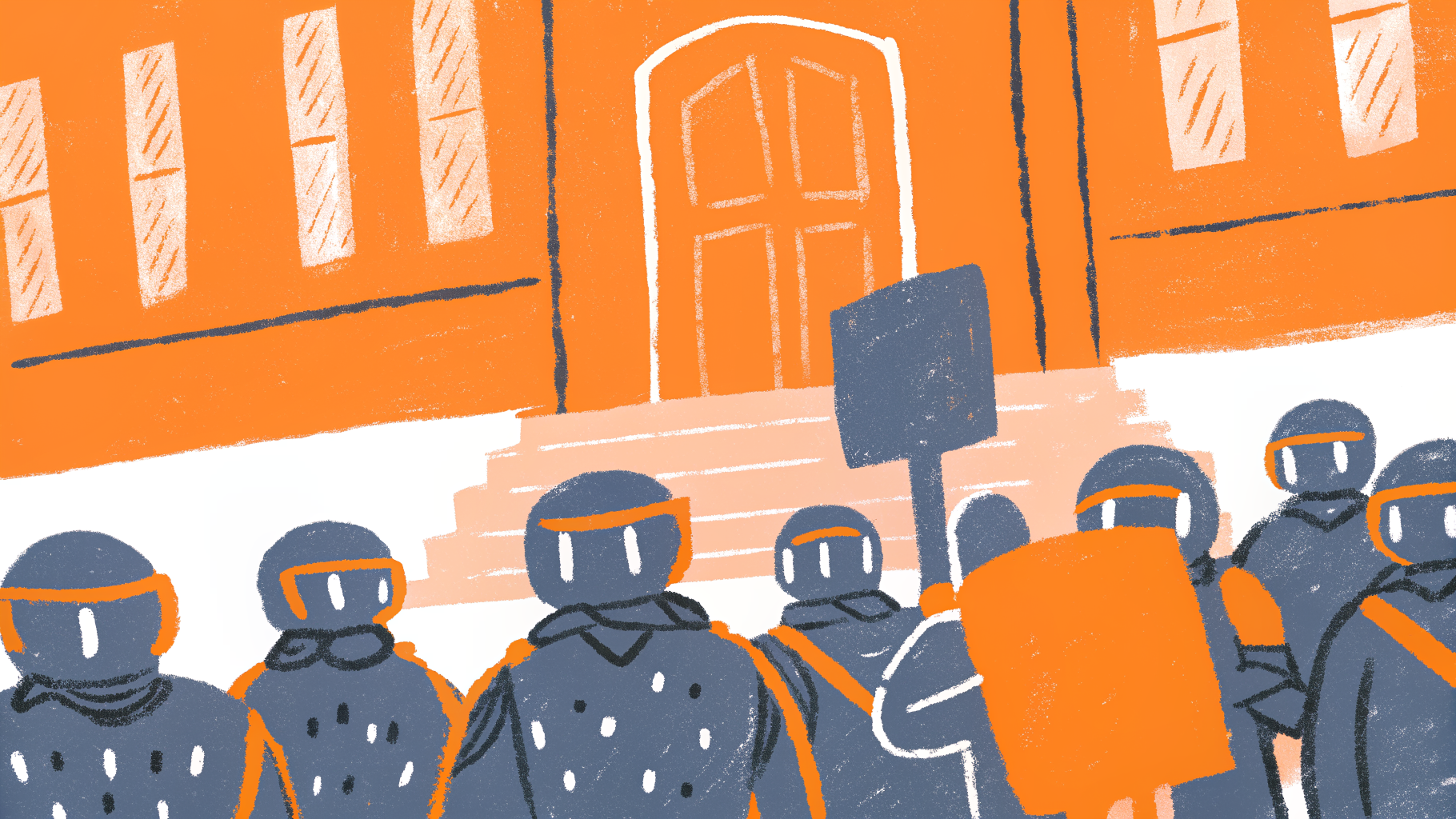
The government deployed riot police around the Constitutional Tribunal
Police were sent to the tribunal as rival judges and political supporters contested access to the building. Officials cited the risk of disorder during the leadership confrontation. The deployment brought the institutional dispute into the streets and made physical control of the court part of the constitutional crisis.
Korwin-Piotrowska called a General Assembly to assert authority over the tribunal
Korwin-Piotrowska planned a to approve the court’s proposed and formalize its internal decisions. Święczkowski’s supporters rejected her authority and continued to dispute the suspension. The planned meeting became a test of which faction could lawfully convene the court’s governing bodies.
Korwin-Piotrowska announced the suspension of Święczkowski and Sochański and claimed interim control
Anna Korwin-Piotrowska announced that she had suspended Bogdan Święczkowski and Vice-President Bartłomiej Sochański for one month and claimed authority to manage the court. Tribunal representatives disputed the legality of the action and said Święczkowski remained president.
Justice Minister Waldemar Żurek sought immunity removals and criminal charges against tribunal leaders
Żurek requested the removal of from Święczkowski and Vice-President Bartłomiej Sochański. The request was intended to enable criminal proceedings over alleged abuses connected with the tribunal’s operation. The move showed that the government was using prosecutorial and disciplinary mechanisms alongside its effort to change the court’s leadership.
Święczkowski refused to seat disputed judges elected by the parliamentary majority
The tribunal’s existing leadership prevented judges whose appointments Nawrocki disputed from taking part in hearings. The judges and government argued that election by the was sufficient, while Święczkowski’s camp treated the unaccepted oaths as blocking their membership. The tribunal consequently operated under rival claims about who could sit and decide cases.
Nawrocki accepted two judicial oaths but rejected four other Sejm nominees
The president accepted the oaths of Magdalena Bentkowska and Dariusz Szostek. He refused to accept the oaths of Markiewicz, Korwin-Piotrowska, Taborowski, and Dziurda. The partial recognition deepened the dispute over whether was required before parliament’s elected judges could exercise their office.
The Sejm elected six replacement judges to change the Constitutional Tribunal’s balance
Parliament elected Krystian Markiewicz, Anna Korwin-Piotrowska, Maciej Taborowski, Magdalena Bentkowska, Marcin Dziurda, and Dariusz Szostek to replace judges whose terms were ending. The vote was intended to give the current parliamentary majority a role in renewing the court. Nawrocki disputed the appointments rather than allowing the new lineup to take effect.
President Karol Nawrocki resisted Tusk-backed efforts to normalize judicial appointments
Nawrocki, aligned with the nationalist opposition, refused to recognize some judges selected by the parliamentary majority. The presidential position treated the disputed appointments as legally defective, while the government argued that the had authority to fill vacant seats. The unresolved disagreement prevented a settled membership for the tribunal.
Bogdan Święczkowski became Constitutional Tribunal president under the previous government’s political legacy
, associated with the Law and Justice era, led the tribunal as its president. His position gave the court’s existing leadership control over scheduling, administration, and the participation of disputed judges. The Tusk government viewed that leadership as part of the institutional problem it sought to change.
Law and Justice’s influence remained entrenched in the Constitutional Tribunal
The tribunal continued to include judges appointed during the earlier Law and Justice period. That composition limited the new government’s ability to redirect the court through ordinary political action. Control of the tribunal’s membership therefore remained central to the wider struggle over .
Donald Tusk’s coalition took office and promised to restore judicial independence
A new led by Donald Tusk replaced the Law and Justice administration after the 2023 parliamentary election. Tusk’s coalition pledged to repair institutions damaged by the earlier judicial changes. Its efforts faced resistance from a tribunal and presidency shaped by the previous governing camp.
Law and Justice reshaped Poland’s Constitutional Tribunal and triggered a rule-of-law dispute
Poland’s is the country’s top constitutional court, reviewing laws and limiting government power. The government changed the court’s composition and was accused of undermining . The dispute created competing claims over which judges were lawfully appointed and whether the tribunal’s rulings were legitimate.