
Kim Jong Un crosses new China bridge as trade ties restart
The crossing gives North Korea a modern route into Chinese markets
Overview
A bridge unused for more than a decade is now carrying a larger message. The between and opened on October 15. It aims to restore trade disrupted by border controls and the pandemic. The bridge can carry vehicles, containers and heavy cargo. Kim Jong Un crossed it into China on October 24, met and promised wider trade, travel and security ties. A visit to a Korean War memorial highlighted the countries’ shared history. A factory tour showed their practical business interests. The opening gives North Korea a newer route to Chinese goods and markets while it strengthens ties with Russia. Beijing gains another way to keep influence over Pyongyang. Still, , customs rules and tensions may limit traffic. The closer ties may bring lasting trade, or mainly send a political message.
Timeline
The bridge's long-term impact remained uncertain despite the diplomatic rapprochement
Future traffic volumes, , , and any new trade agreements will determine whether the crossing becomes a durable commercial artery. The opening and visit demonstrate political intent, but available reporting does not yet establish sustained freight activity or a lasting transformation in China-North Korea relations.
North Korea's closer ties with Russia coincided with renewed Chinese engagement
The October contacts came as Pyongyang strengthened relations with Moscow while restoring economic and official ties with Beijing. The bridge opening and Kim's visit signal renewed China-North Korea engagement, but they do not by themselves prove a broader .
China and North Korea linked the bridge opening to a wider effort to restore bilateral trade
The bridge gives North Korea a modern route for vehicles, containers, and heavy cargo into its most important neighboring economy. Expanded connectivity could increase access to Chinese goods and logistics networks, but the bridge's physical capacity does not show how much traffic will actually use it.
Kim Jong Un and Wang Huning visited a Chinese automobile factory to add an industrial focus
The delegation toured production workshops at an automobile factory in Dandong and received an explanation of its operations. The visit broadened the agenda from border symbolism to manufacturing, transport, and possible practical areas for economic cooperation.
Kim Jong Un and Wang Huning visited a Korean War memorial to reinforce their wartime alliance
Kim visited a memorial connected with the Korean War alongside Chinese officials during the Dandong trip. The gesture placed the new commercial connection within the historical China-North Korea alliance and added political meaning to an otherwise trade-focused visit.
Kim Jong Un and Wang Huning agreed to expand China-North Korea cooperation
Kim met Wang Huning, chairman of the Chinese People's Political Consultative Conference, in Dandong. The two sides pledged to expand personnel exchanges and economic and trade cooperation, while also strengthening strategic communication and cooperation on , security, and development interests.
Kim Jong Un entered China through the new bridge for a rare Dandong visit
Kim arrived in after crossing the New Yalu River Bridge, in his first known foreign trip in more than a year. His route directly connected the infrastructure opening with a high-level diplomatic gesture toward Beijing.
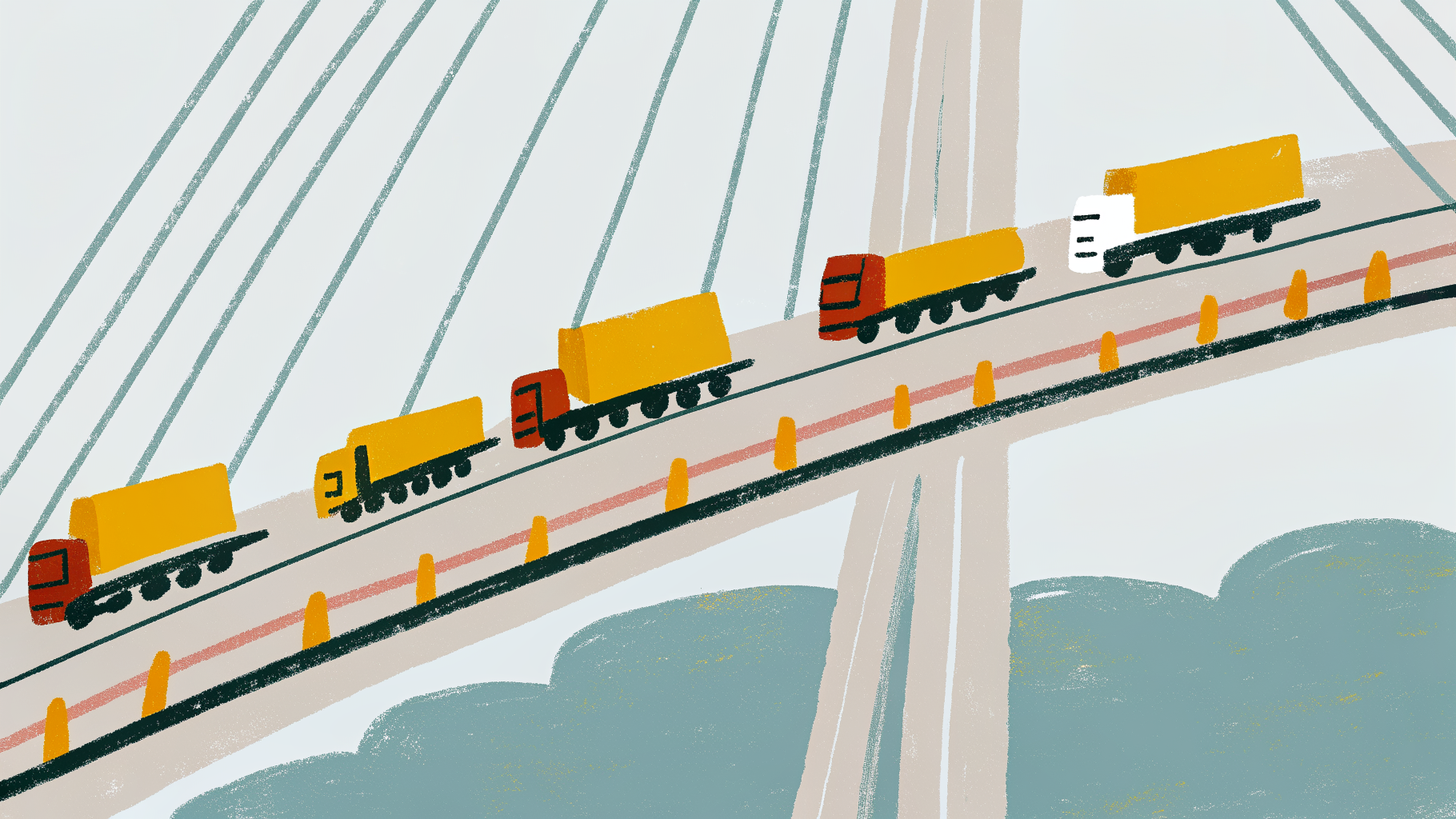
Flag-decorated trucks began testing the bridge as a commercial crossing
Vehicles crossed the newly opened bridge after the ceremony, giving the project its first visible test as an operating trade route rather than a completed but dormant structure. The crossing is designed for two-way traffic, , and heavy cargo trucks, although early movements do not establish sustained freight volumes.
China and North Korea opened the New Yalu River Bridge to traffic
The two countries held a joint opening ceremony for the roughly 3-kilometer between Dandong and Sinuiju. Officials presented the four-lane crossing as a new transport link intended to restore trade, economic activity, and people-to-people exchanges after years of disruption.
China and North Korea completed the New Yalu River Bridge but left it unused
The bridge linking Dandong and Sinuiju was completed about 12 years before it opened, but border controls, unresolved facilities, strained relations, and later pandemic disruption delayed regular operations. Its prolonged inactivity turned the project into a symbol of stalled economic ties.