
Politics
Karnataka Begins Month-Long Electoral Roll Overhaul
Why has this voter verification drive sparked political opposition and public concern?
Why has this voter verification drive sparked political opposition and public concern?
Karnataka has launched a month-long Special Intensive Revision of electoral rolls, triggering a critical test of the Election Commission’s ability to verify, delete, and correct voter data at scale. This exercise aims to ensure no eligible citizen is excluded while removing ineligible names, yet it has sparked political opposition and public concern over the burden of fresh documentation. The outcome will directly shape the integrity of upcoming elections by determining the final voter list used for polling.
Karnataka's gathered pace with more than 1.12 crore (1,12,65,893) enumeration forms distributed to voters within the first three days of the starting June 30. The forms account for 20.32% of the state's 5.54 crore registered electors, with 1.11% already digitized and 37,783 online submissions recorded. Officials also identified 7,582 electors under the '' category during this initial phase.
As Karnataka's began, the State Cabinet formally called for greater transparency and safeguards against wrongful voter deletions, seeking to extend the submission deadline from one month to at least three months. The Cabinet also requested publication of a comprehensive manual detailing '' categories, the software or algorithm used for identification, and . Chief Electoral Officer V. Anbu Kumar clarified that no documentary proof would be demanded during house-to-house enumeration.
Chief Minister D.K. Shivakumar officially launched Karnataka's door-to-door enumeration on June 30, 2026, by filling his at his Sadashivanagar home. He urged voters to participate, warning that non-participation could affect access to future government welfare benefits, and noted that some states are already linking benefits to voter status. The launch included his wife Usha Shivakumar, with Bengaluru South Deputy Commissioner and election officials present.
Election officials confirmed that the remained halted throughout the SIR process until the final electoral roll was published on October 7. This ensured no parallel voter list changes occurred during the .
Karnataka's final electoral roll was published after disposal of all claims and objections. This roll, based on the of October 1, 2026, will be used for upcoming elections, marking the successful completion of the .
The deadline for voters to file claims or objections against the passed. Over the preceding month, citizens could challenge deletions, report duplicates, or request inclusion of missing eligible voters, with officials processing all submissions.
Karnataka's draft electoral roll was officially published, incorporating all data collected during the SIR enumeration. This draft will serve as the basis for filing claims and objections, with a 30-day window for public scrutiny and corrections.
The 30-day door-to-door enumeration period ended, and officials began rationalizing polling stations where needed. This phase ensured that voter data was fully collected and ready for the next stage of draft roll publication.
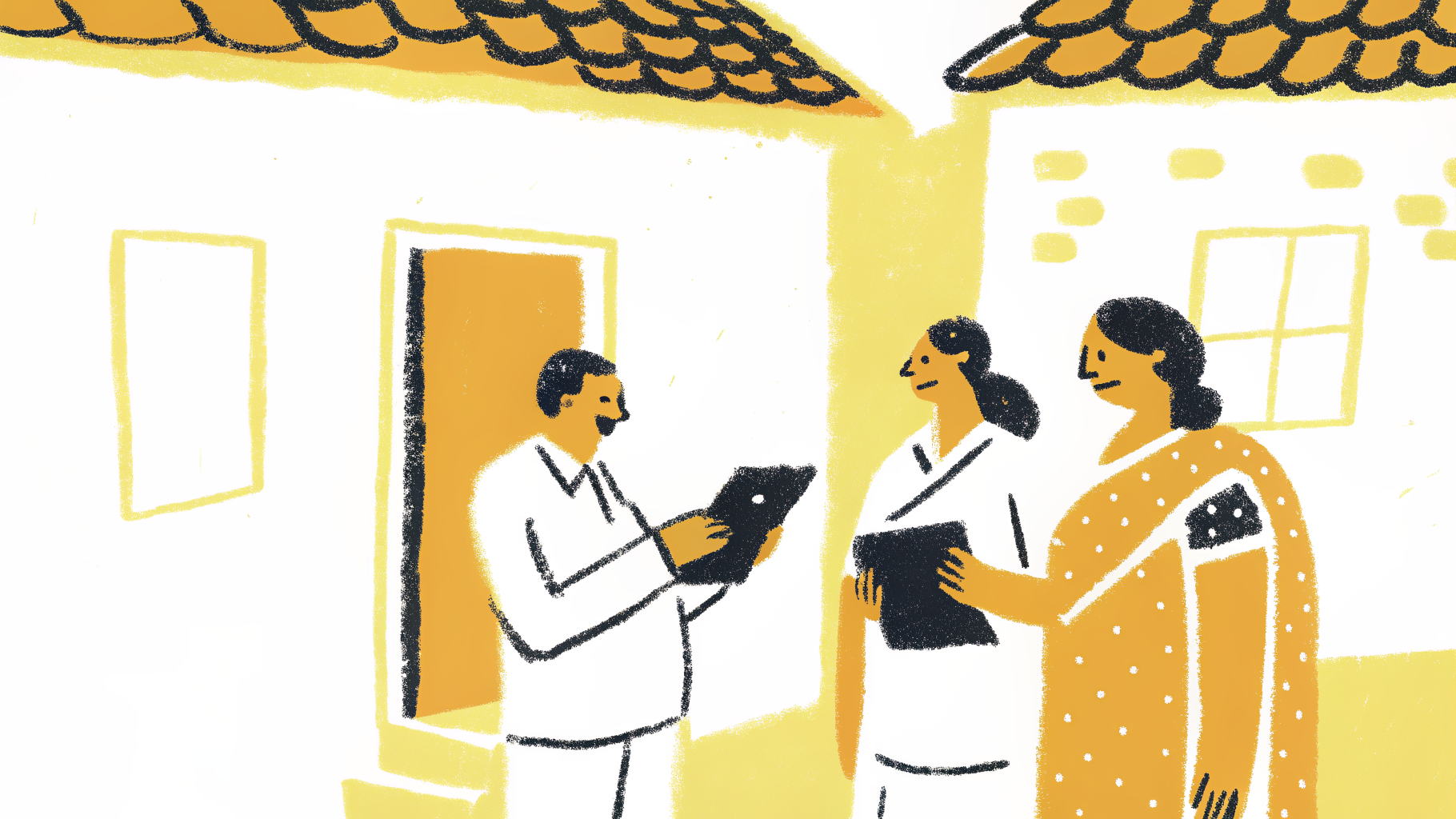
The Chief Electoral Officer of Karnataka launched the house-to-house enumeration phase, with Booth Level Officers visiting voters to collect data. Electors received two sets of customized forms—one to retain after verification and another for official processing, with a 30-day window to submit them.
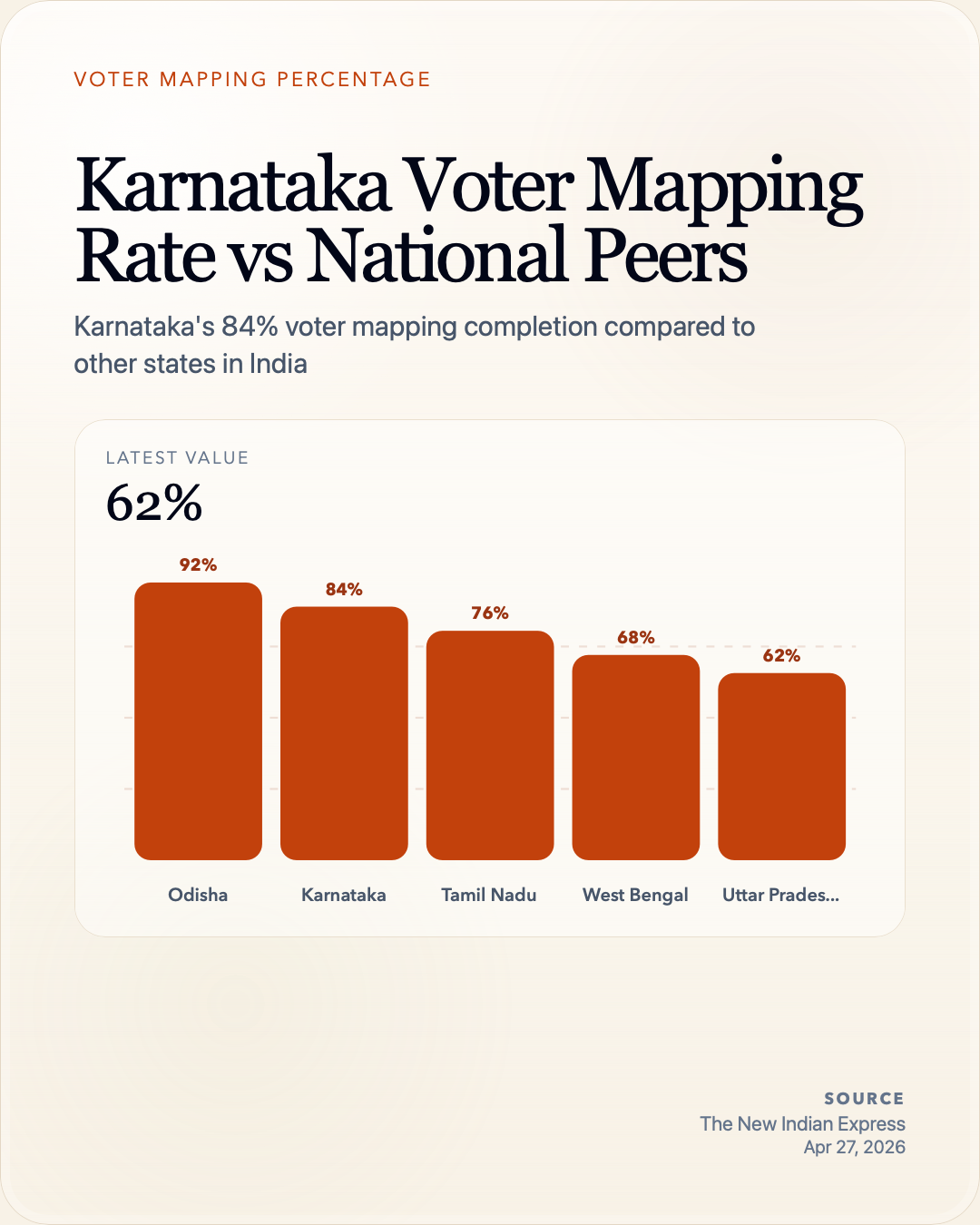
Officials reported that 91.56% of voter mapping was completed in Karnataka, the second-highest rate in India after Odisha. In Greater Bengaluru Authority limits, mapping stood at 75%, while excluding GBA would push the state's rate to 94%.
Karnataka entered the first phase of SIR with preparation, training, and printing of . Over 11 crore partially pre-filled, customized forms were printed for the state's 55.5 million voters, with door-to-door data collection scheduled to start later in the month.
The officially announced the exercise for Karnataka, setting the stage for a major voter verification drive. This decision marked the ninth national SIR since the last one in 2002, aiming to ensure no eligible voter is left out and no ineligible name remains in the rolls.