
Business & Economy
Hormuz Tensions Spike Crude Prices and Threaten India Growth
How will Trump's toll proposal and rising oil costs delay RBI rate cuts?
How will Trump's toll proposal and rising oil costs delay RBI rate cuts?
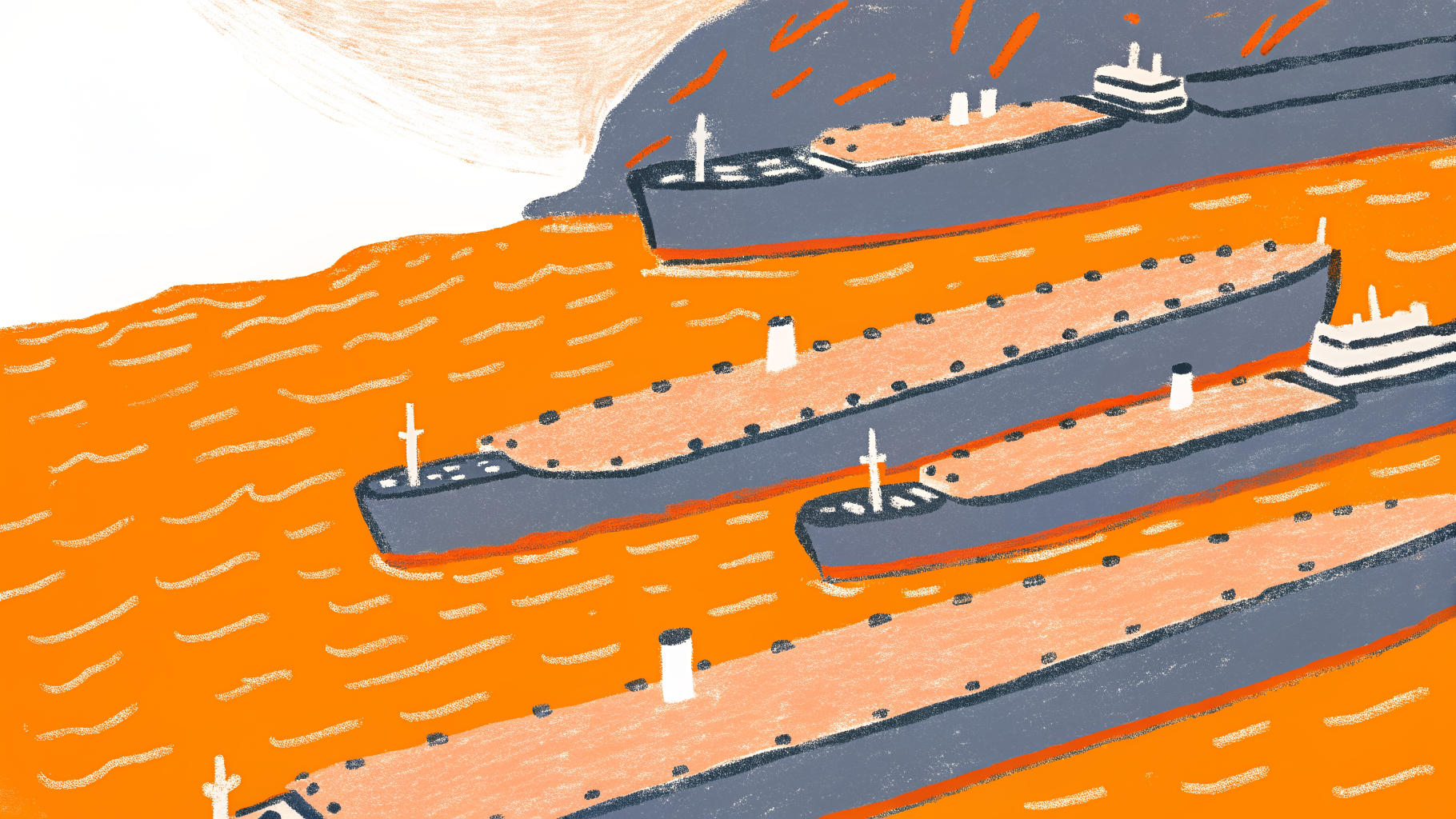
Renewed US-Iran tensions over the have triggered a sharp crude oil price spike, immediately raising India's import bill and inflation risks. As nearly 50% of India's crude imports pass through this chokepoint, the disruption threatens to stoke domestic inflation, weigh on the , and constrain while testing the nation's . Experts caution that prolonged standoff could push India's above $75 per barrel, intensifying pressure on growth outlook and forcing the government to balance supply buffers against rising consumer costs.
The renewed Hormuz crisis directly threatens India's economic growth outlook by raising import costs and inflation, forcing policymakers to balance energy security with macroeconomic stability. A spike in oil prices could fuel broad-based inflation and weigh on growth at a time when and a weaker monsoon are already expected to pressure the economy. Experts recommend India continue diversifying crude sources away from Gulf suppliers to mitigate future Hormuz risks.
The ongoing conflict is expected to delay further cuts by the RBI, which had already cut rates by 1.25% in this easing cycle, dampening hopes for lower EMIs and borrowing costs. With inflation exceeding the RBI's target, the surge in crude prices has intensified concerns over , posing a key constraint on monetary easing. Policymakers now face the challenge of balancing energy security with macroeconomic stability amid rising import costs.
India's oil refiners signaled they are on edge as the Hormuz flare-up revived concerns about higher import bills, inflation, and slower economic growth, even as crude supplies remain secure for now. Analysts calculated that a one-dollar increase in crude adds ₹35 lakh per day to India's import bill, translating to roughly ₹13,000 crore annually. With 30-40% of India's crude and 45-55% of its transiting Hormuz, the sector faces direct pressure on fuel inflation and fertilizer costs.
By Tuesday, Trump abandoned the 20% fee plan in favor of a targeted blockade on ships linked to Iran, though the flare-up already underscored India's vulnerability to energy market disruptions. Despite the policy shift, crude prices stayed elevated as uncertainty over Hormuz shipping persisted, with Brent trading 7.60% higher at $78.41 per barrel. The shift to a blockade targeting only Iran-linked ships tightened global supply further, directly increasing India's import bill.
The toll proposal triggered immediate market panic, with Brent crude spiking nearly 9% within hours and briefly crossing $82 per barrel, its highest level since January 2025. The development drove Brent crude by 5% to over $87 a barrel on Tuesday before easing slightly following Trump's policy flip-flop. Analysts warned that a sustained increase in oil prices would raise India's import bill and widen the current account deficit.
On Monday, President Trump announced a plan to levy a 20% fee on all vessels transiting the , calling it compensation for US military efforts to secure the waterway. He simultaneously reinstated a on Iranian ports, triggering immediate market panic and sending crude prices soaring. The proposal raised concerns over India's inflation and economic growth as the country's oil import bill came back into focus.
oil rose 3.47% on Tuesday to $86.19 per barrel after the United States and Iran exchanged fresh military strikes over the weekend. The renewed conflict revived fears that global oil supplies could be disrupted, prompting traders to push prices higher amid continuing tensions in the Gulf region. This escalation marked the beginning of renewed uncertainty over shipping through the Strait of Hormuz, one of the world's busiest oil transit routes.
A study by the recalled its projection of a of 4.48 percentage points from a full Hormuz closure, with crude oil responsible for 71% of the total impact. The study noted that prices of around 90% of tracked products would rise more than 1% in such a scenario, underscoring the systemic risk to India's economy. This projection highlighted how energy shocks translate directly into broad-based inflation and monetary policy constraints.
India's Ministry of Statistics reported rose from 3.93% in May to 4.38% in June, slightly exceeding the market consensus forecast of 4.3%. This acceleration occurred as inflation now exceeded the , intensifying concerns over imported inflation and posing a key headwind to the macroeconomic environment. Higher fuel costs from previous energy shocks began feeding into broader inflation, pressuring the trade balance.
A signed on June 15 established a 60-day ceasefire between the US and Iran and laid the roadmap for reopening the Strait of Hormuz, with the formal signing set for the June 21 Geneva meeting. Oil prices dropped immediately on the news, with Brent crude falling 4% to around $84 a barrel as eased. The agreement was expected to relieve crude supply risks, lower freight costs, and reduce inflationary pressures for India.
India's jumped 52.3% year-on-year to $16.3 billion in April 2026, driven by severe supply chain friction from West Asia conflict and Hormuz blockading. This surge occurred even as the physical volume of crude imported fell by 4.3%, confirming that the primary driver was the vertical spike in global benchmarks rather than increased consumption. The ballooning capital drain intensified concerns over imported inflation and currency stability.
India's Monthly Economic Review for March 2026 explicitly flagged that disruptions in the threaten economic growth and inflation by choking global energy flows and tightening supply. The report highlighted that nearly 50% of India's crude oil imports pass through this chokepoint, creating direct pressure on fuel inflation and household costs. Officials warned that any prolonged disruption could trigger supply shortages and widen the due to rising energy import costs.