
World
Glacial collapse triggered Nepal flash floods, not earthquake USGS
How quickly can Himalayan warnings separate quake signals from deadly ice and debris flows?
How quickly can Himalayan warnings separate quake signals from deadly ice and debris flows?
A sudden at the Nepal-China border has become a test of how quickly authorities can distinguish an earthquake from a . The revised finding matters because the trigger shapes rescue efforts, hazard monitoring, and future warning systems for vulnerable border communities facing fast-moving ice, rock, and water surges.
The corrected diagnosis sharpened the case for better , , and in the . It also showed how fast-moving ice and rock failures can be misread at first, delaying a full understanding of the danger to .
After further analysis, the USGS said the event was not an earthquake at all, but a glacial collapse and . It cited nearby seismic stations, , and , and said the collapse generated the seismic signal and catastrophic downstream impacts.
Nepali authorities and border-area responders widened rescue and damage assessments across the affected river basin. The and other agencies compiled missing-person lists while officials in India and Nepal coordinated over stranded and unaccounted-for nationals.
Officials and media reports said the death toll rose quickly as rescue teams assessed the destruction. Hundreds were reported missing, including Indian nationals and other foreign travelers linked to the , making the humanitarian scale of the disaster immediately clear.
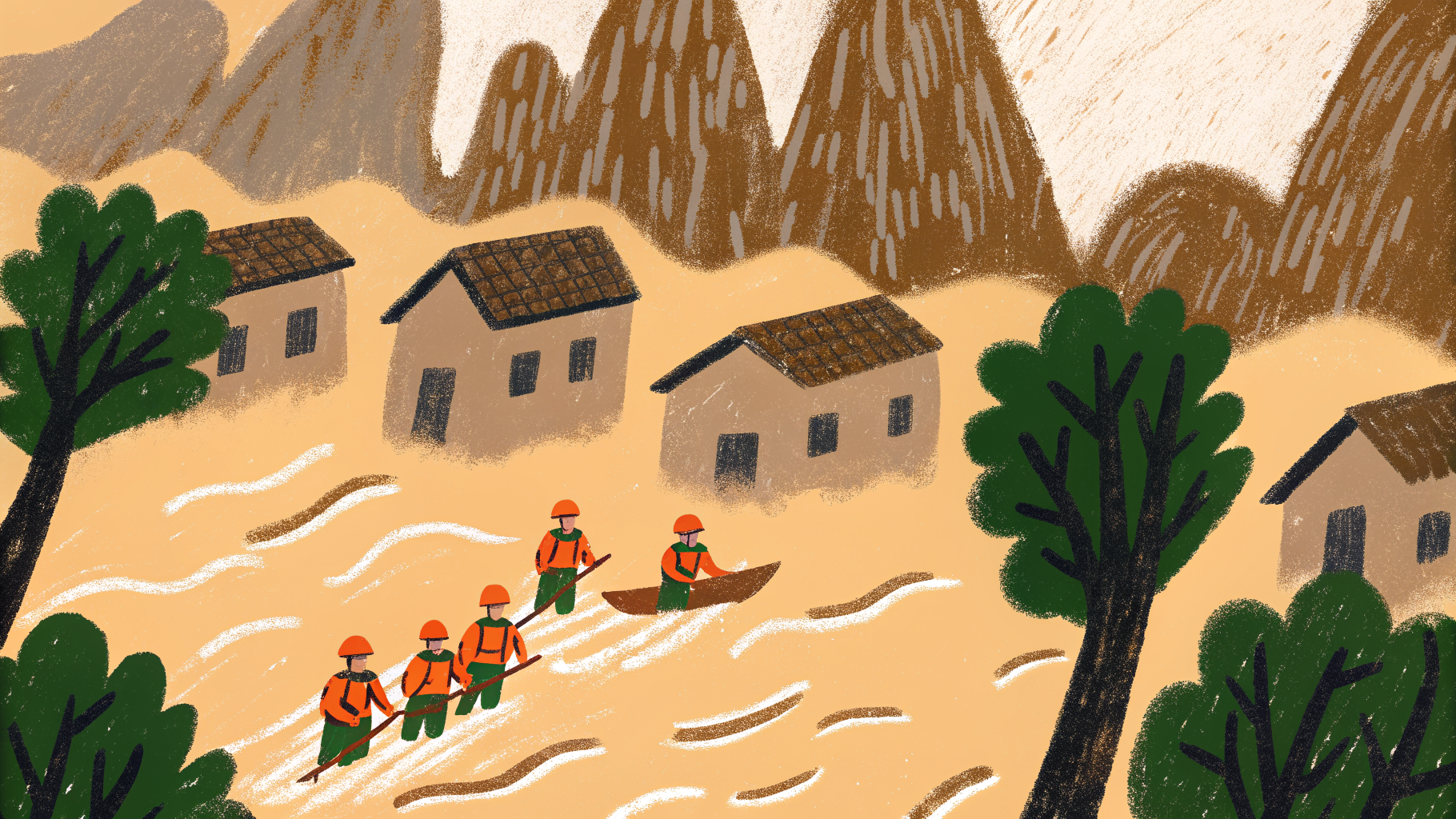
The torrent slammed into Nepal’s border districts, especially , with impacts also reported in Dhading and nearby areas. Roads, bridges, project sites, and settlements were damaged as the flood swept through the area and other downstream corridors.
The U.S. Geological Survey initially logged a earthquake near the border, and some Nepali officials also first treated the flood as possibly quake-linked. At that stage, the trigger was still uncertain, with , landslide, or other mountain failure all being considered.
A sudden flash flood started on the Tibet side of the Nepal-China border and rushed downstream toward Nepal. Early reporting said the surge moved through the and s, making the disaster a cross-border event from the first hours.