
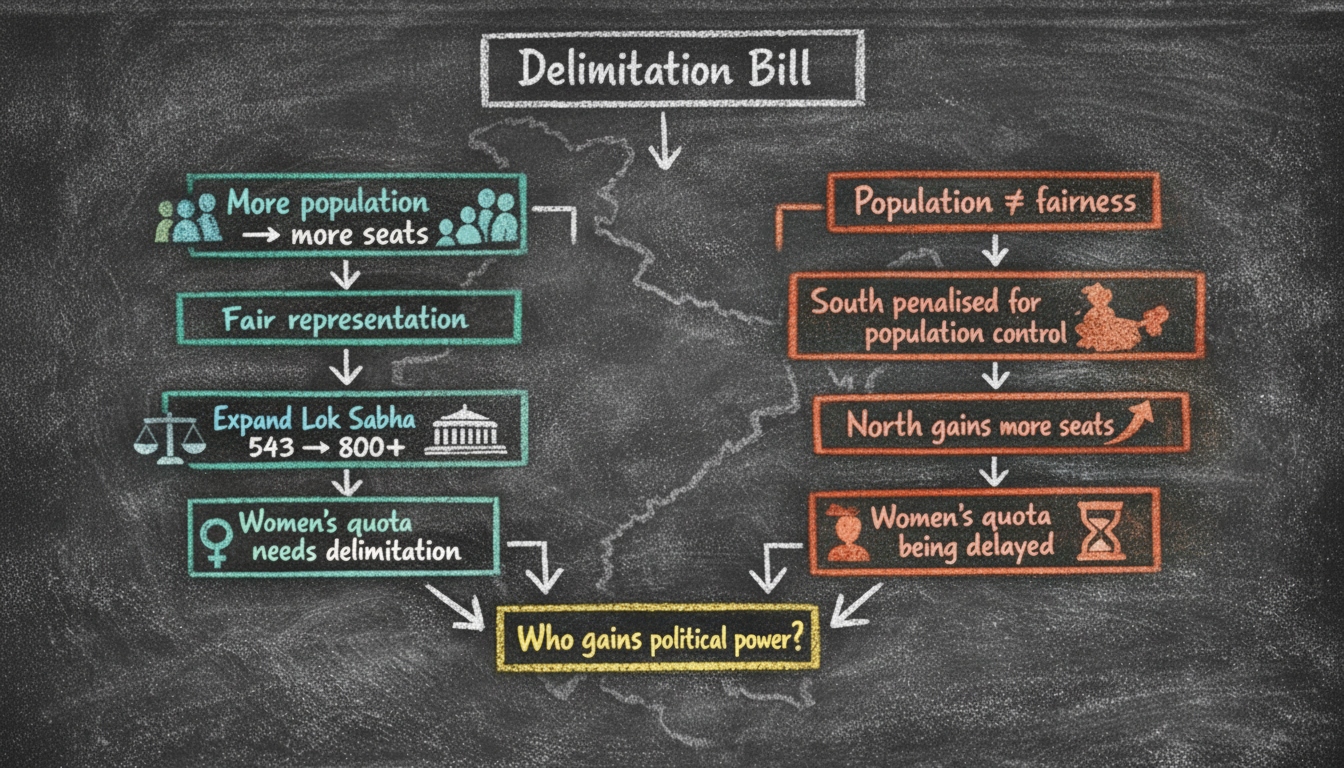
India's Parliament held a three-day special session to debate the , which proposed redrawing constituencies and increasing seats by 50% based on a future census, alongside bills for and Union Territories laws. Southern leaders like Tamil Nadu CM fiercely opposed it, burning copies and protesting that it would reduce their states' influence due to slower population growth compared to the north, despite government assurances of seat gains from 39 to 59 for Tamil Nadu. Opposition parties backed the women's reservation but rejected linking it to delimitation, fearing delays and unfairness, while the government defended it as fair expansion. Intense debates highlighted federal tensions over population shifts and family planning rewards. On April 18, the bill failed in the vote, preserving the current balance and marking a major win for regional interests against electoral overhaul.
The three-day session ended with the not passed, while faced uncertain fates amid the row. Opposition hailed it as victory for federalism; government decried political obstruction. It highlighted in India.
The Delimitation Bill was at 4 PM Friday, following united opposition from key leaders. Despite government assurances and women's quota support, over seat redistribution. The failure marked a setback for electoral overhaul, .
Critics challenged the constitutional amendment , fearing . Government pushed for swift implementation via expanded seats, but opposition saw it as . This counterpoint shifted focus from gender justice to timing and equity.
Debate raged over delimitation's math: while south faces dilution of influence. Opposition argued it ; government countered with . Key exchanges exposed federal tensions in India's evolving democracy.
MK Stalin called the day , urging complete withdrawal of the Delimitation Bill despite assurances. He framed ongoing protests as a harming state interests. Stalin's rallied regional support, intensifying pressure on the government.
Senior Congress leader P Chidambaram declared the Delimitation Bill would be defeated, citing . He emphasized opposition resolve to block what they saw as . This bold statement ahead of voting.
Prime Minister and Home Minister Amit Shah gave verbal assurances in Parliament that . This addressed amid national population shifts. The assurances aimed to but failed to fully sway opposition demands for bill withdrawal.
Speaker Om Birla scheduled on the bills, with , ensuring thorough discussion. The extended timeline reflected the bills' on India's political landscape. It allowed parties to articulate points on women's quota benefits versus delimitation's regional inequities.
Several opposition parties supported the 33% women's reservation but opposed linking it to delimitation, creating a clear political divide. , set to reach 33% post-delimitation, yet critics argued the . This split underscored support for gender equity while rejecting perceived .
Responding to DMK's protests, government sources accused the party of a political stunt, clarifying . They emphasized southern states would gain rather than lose representation under the expanded framework. This counter countered opposition narratives of 'punishing' , stressing overall .
Law Minister Arjun Ram Meghwal tabled the Delimitation Bill, proposing a 50% increase in Lok Sabha and assembly seats based on the upcoming census, . The bill includes provisions for like Delhi, Puducherry, and Jammu & Kashmir. Government argued it would boost representation without harming southern states, framing it as essential for .
Tamil Nadu CM MK Stalin protested by and hoisting a black flag, coinciding with Parliament's session start. He demanded full withdrawal, fearing due to lower population growth compared to northern states. This symbolic act highlighted regional anxieties over the bill's impact on and seat allocation.
Parliament opened a high-stakes three-day special session in New Delhi to debate three landmark bills: the Constitution (131st Amendment) Bill for in Lok Sabha and state assemblies, the to redraw constituencies, and the Union Territories Laws (Amendment) Bill. These bills aim to overhaul India's electoral framework by and implementing women's reservation ahead of 2029 elections. The session set the stage for intense political clashes over representation and regional equity.