
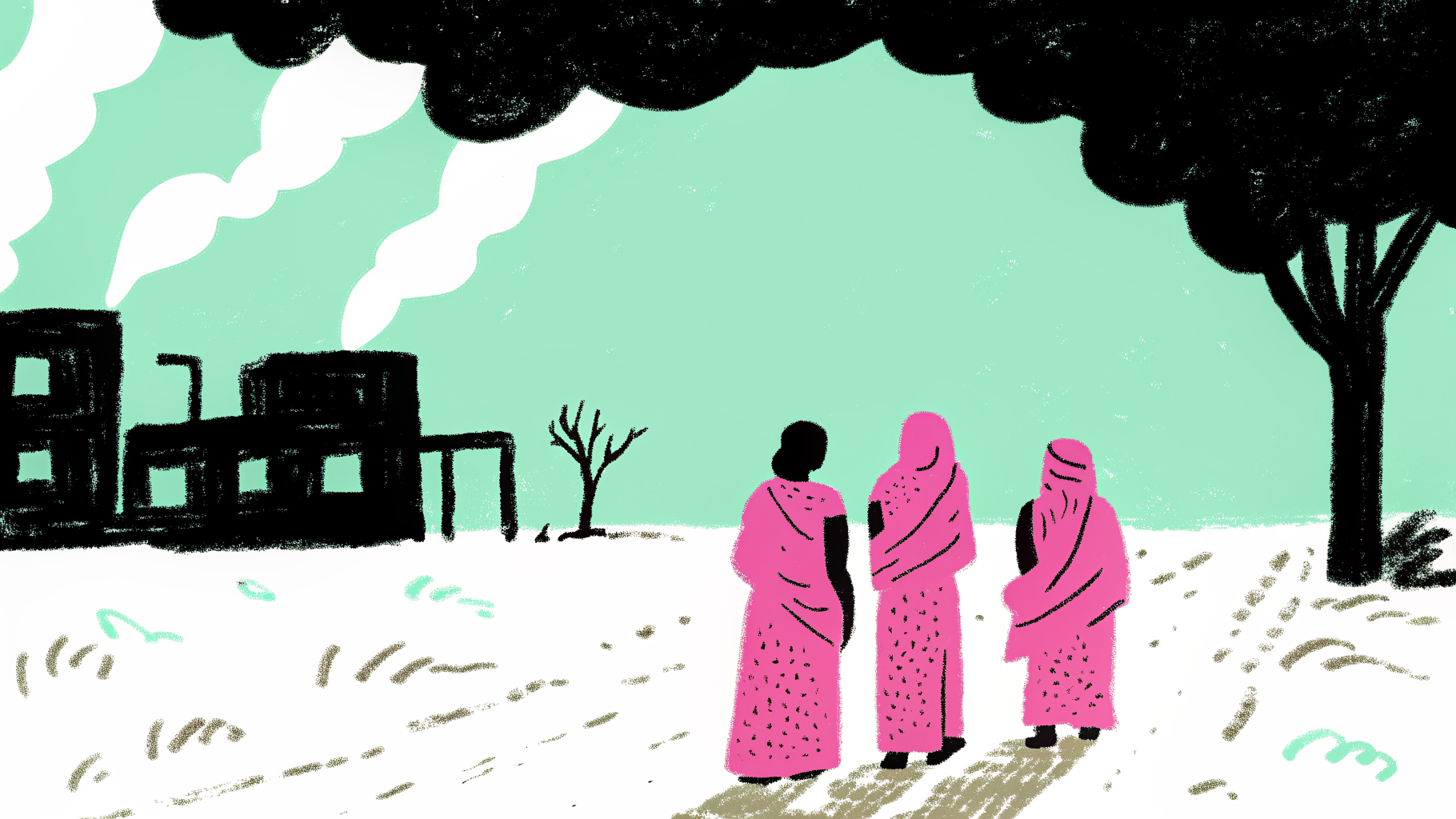
Delhi smog curbs leave outdoor workers without income
Construction stoppages and fewer customers shift pollution controls’ immediate financial costs onto workers without indoor jobs or paid leave.
Overview
and can reduce exposure for people who can stay indoors. But vendors, delivery workers, rickshaw drivers and construction labourers cannot simply stop working. Construction workers report work stoppages and fewer jobs. Their daily pay has fallen from about Rs 700-800 to Rs 300-350. Other street earners are losing customers or working shorter shifts. Restrictions may cut pollution and protect health because long exposure raises . But enforcement can leave bearing the cost. Governments, municipalities, and employers must control pollution, enforce safety rules and provide timely support. Relief remains limited or delayed.
Timeline
The smog response left workers dependent on delayed relief rather than protected income
Reports documented falling wages, stopped construction work and delayed financial assistance for affected labourers. and NCR agencies imposed restrictions on pollution sources, but the available response did not provide a reliable income replacement system for vendors, drivers and other informal outdoor workers. The episode therefore exposed a protection gap, enforcement reduced some emissions while shifting much of the economic burden onto people who could not work from home.
Delhi-NCR faced possible Stage IV conditions as pollution restrictions broadened
Reporting during the episode described , the severe-plus level triggered when exceeds 450, as involving wider school restrictions, construction and industrial closures, and tighter limits on non-essential goods vehicles. The emergency framework was designed to suppress emissions during the worst conditions. For workers without paid leave or alternative employment, each added restriction increased the risk of unpaid days unless governments and employers provided support.
Workers continued outdoor jobs despite health risks and reduced demand
Street-based earners faced a direct trade-off between breathing polluted air and going without wages as customers stayed indoors and construction work remained restricted. Drivers, vendors and delivery workers could shorten shifts or relocate, but those choices also reduced earnings. The episode showed that stay-indoors guidance protects people with flexible work more readily than workers whose income depends on being outside.
Construction workers reported wage cuts, joblessness and delayed subsistence aid
Migrant and daily-wage workers said construction stoppages had removed their regular income and left them searching for occasional repair or informal work. Reported wages fell from roughly Rs 700 to Rs 800 per day to Rs 300 to Rs 350 where work remained available. One registered construction worker said he had not received the expected Rs 5,000 after renewing his .
Schools adopted hybrid learning while outdoor workers continued working outside
Authorities shifted schooling toward to reduce children’s exposure during severe pollution. The policy assumed that students and families could spend more time indoors, but many parents working as vendors, drivers, delivery workers or labourers could not leave outdoor employment. Children’s protection therefore depended partly on households whose earners remained exposed.
Stage III tightened vehicle, industrial and mining restrictions
The revised schedule restricted older diesel goods vehicles, certain truck movements and polluting industrial activity, while also covering and mining operations. These measures targeted major pollution sources and reduced transport access for drivers and supply chains. They also cut customers and delivery opportunities for drivers, vendors and businesses dependent on construction materials.
Stage III halted most construction and dust-generating work
The Stage III measures suspended excavation, demolition, roadwork, piling, brickwork and other dust-generating construction activity, with limited exemptions for . The decision directly removed jobs from construction labourers, plumbers, masons, transport workers and related suppliers. Workers reported that replacement employment was scarce and that stoppages transferred the immediate cost of pollution control to daily earners.
CAQM invoked GRAP Stage III across Delhi-NCR for severe air quality
CAQM imposed with immediate effect after forecasting severe air quality, defined by GRAP as AQI 401 to 450. The order applied across the and required all relevant agencies to continue Stage I and Stage II measures. Pollution-control boards and the Delhi Pollution Control Committee were directed to enforce the expanded restrictions.
Delhi’s smog intensified as weather and multiple emission sources combined
Pollution remained elevated as weak dispersion allowed emissions from vehicles, construction, industry and regional burning to accumulate. Fireworks and transport added episodic pollution, but the episode was driven by several interacting sources rather than a single cause. The worsening forecast prompted to prepare the next escalation.
Authorities urged offices to reduce travel and use remote work where possible
Work-from-home and travel-reduction guidance was aimed mainly at formal offices and employees with indoor workplaces. , delivery workers, street vendors and rickshaw drivers could not apply the same advice without abandoning their earnings. The policy therefore reduced some exposure while leaving outdoor workers responsible for the income loss.
Outdoor earners reported falling work and income as smog worsened
Construction workers, plumbers, vendors, drivers and other faced fewer customers and less available work as outdoor activity declined. Workers who could not move to an indoor job had to choose between exposure and losing a day’s income. The restrictions affected people without paid leave, remote-work options or guaranteed subsistence support.
Delhi-NCR entered the very poor air-quality range and triggered GRAP Stage II
CAQM invoked Stage II of the on November 2 as air quality reached the category, defined under GRAP as AQI 301 to 400. The measures added tighter controls on pollution-generating activity and required agencies to intensify enforcement. The escalation marked a shift from precautionary action to active emergency restrictions.
CAQM issued precautionary pollution measures for the November risk period
The issued precautionary measures covering from November 5 to November 20. The move prepared agencies for worsening winter pollution before the highest GRAP stages were activated. Pollution-control boards, municipal authorities and other enforcement bodies were expected to implement the measures.
Winter weather trapped pollutants over Delhi and NCR
Unfavourable meteorological conditions reduced the dispersion of pollutants as the winter smog episode developed. The revised GRAP schedule identified poor dispersion and weather conditions as key reasons for emergency intervention. Vehicle emissions, construction dust, industry, crop burning and seasonal firecracker pollution added to the accumulated load.
The revised GRAP schedule expanded emergency controls on vehicles and essential-work exemptions
’s revised schedule set four escalation bands, including Stage III for 401 to 450 and Stage IV for above 450. It removed some exemptions for older goods vehicles carrying essential commodities and clarified restrictions on older diesel light and medium goods vehicles entering Delhi. The changes gave enforcement agencies broader powers while increasing the risk of interrupted transport and work.