
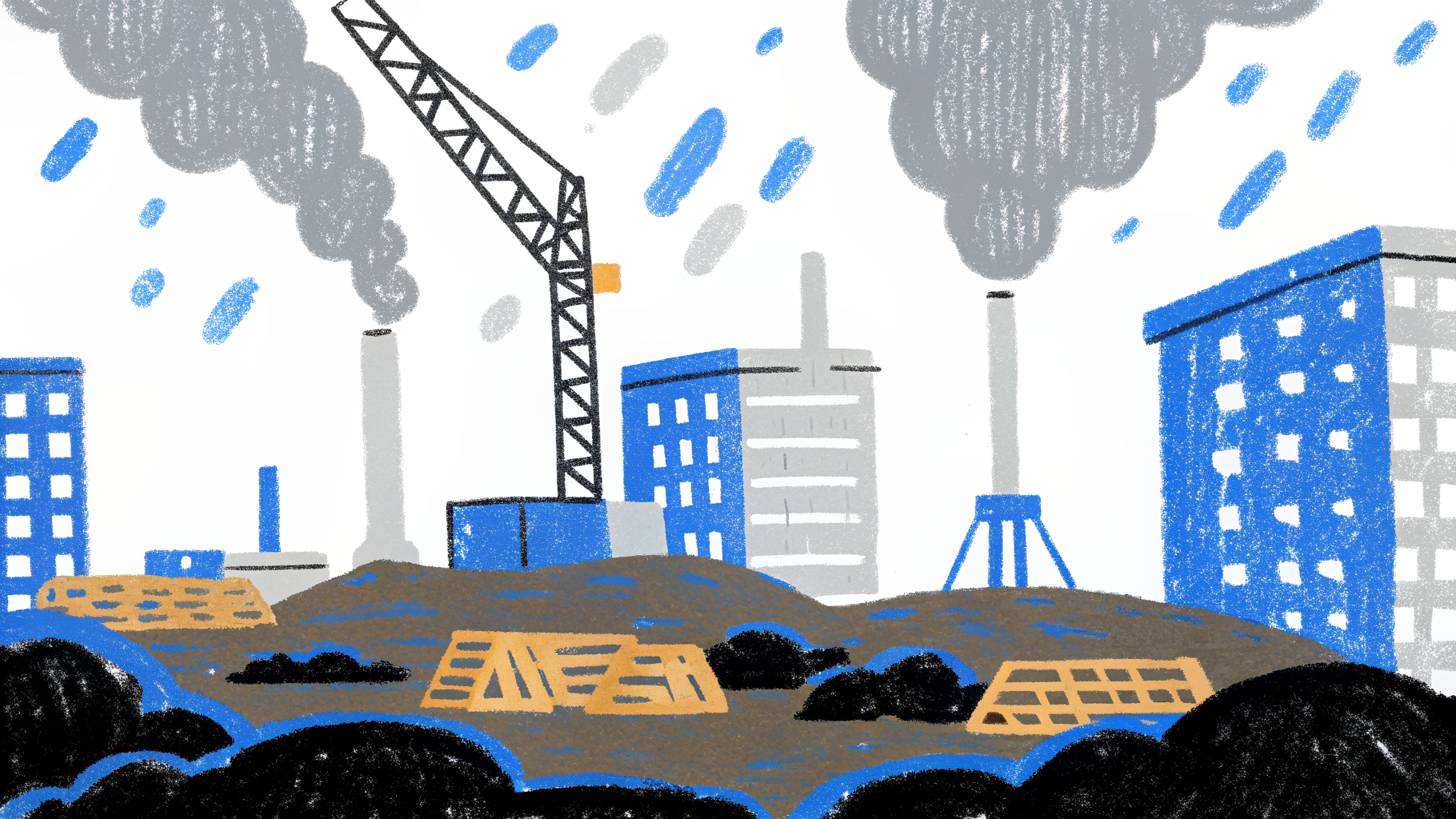
Stage III restrictions halt dusty construction across Delhi-NCR
Emergency pollution controls disrupt work, travel and goods movement before Diwali.
Overview
has tightened pollution controls before Diwali as Delhi’s air quality worsened from very poor to near-severe levels. The was about 382 to 389. Calm winds are trapping pollution, and fireworks could cause another sharp rise. After Stage II, authorities raised controls to Stage III across the region, including Gurugram, Faridabad, Ghaziabad, Gautam Buddh Nagar and Sonipat. The rules stop non-essential dusty construction, demolition, mining, stone crushing and that do not use clean fuel. They also restrict , including some .
Hospitals, metro and rail projects, and national-security work are exempt. The measures may cut dust and vehicle pollution, but they will disrupt commuters, construction workers, businesses and goods transport. Their impact will depend on how well officials enforce them, Diwali fireworks, the weather and pollution drifting from nearby areas. Residents remain exposed to unhealthy air.
Timeline
Stage III restrictions added construction, vehicle and workplace measures before Diwali
CAQM’s Stage III measures restricted non-essential construction and demolition, tightened controls on older vehicles and goods movement, and included workplace and school-related measures intended to reduce exposure and emissions before Diwali.
Stage III suspended major dust-generating construction and industrial operations across NCR
The restrictions covered excavation, filling, boring, drilling, piling, demolition and open-trench work for utilities, along with other activity and the transport or handling of construction materials on unpaved routes. Stone crushers, mining and non-clean-fuel hot-mix plants were also targeted. Metro, railway, hospital, airport, national-security and other essential projects could continue subject to dust-control requirements.
Stage III restricted older petrol and diesel vehicles across Delhi and parts of NCR
After CAQM invoked Stage III on November 6, restrictions applied to and light motor vehicles in Delhi and specified NCR districts. The measures also restricted certain older diesel goods vehicles entering Delhi, subject to the applicable rules and exemptions.
CAQM invoked GRAP Stage III across Delhi-NCR as pollution continued to worsen
CAQM imposed Stage III across the entire NCR with immediate effect, treating the situation as a risk of severe air quality, defined under the GRAP schedule as AQI 401 to 450. The decision retained Stage I and Stage II measures while adding tighter controls on construction, transport and other pollution-generating activities. The order covered Delhi and NCR districts including Gurugram, Faridabad, Ghaziabad, Gautam Buddh Nagar and Sonipat.
Delhi’s AQI reached 382 as air quality remained very poor before Diwali
Delhi’s average reached 382 on November 6, remaining in the very poor category and approaching the severe threshold. The deterioration preceded the invocation of Stage III restrictions, while Diwali-related emissions remained a concern.
CAQM invoked GRAP Stage II after Delhi air quality fell into the very poor category
moved Delhi-NCR to Stage II as Delhi’s AQI deteriorated ahead of Diwali. Stage II applies when air quality reaches the very poor range and adds measures such as daily mechanical road sweeping, water sprinkling, higher parking charges, stronger public transport services and tighter controls on diesel generators and solid-fuel use. The staged framework increases restrictions as pollution worsens instead of imposing the most disruptive measures immediately.