
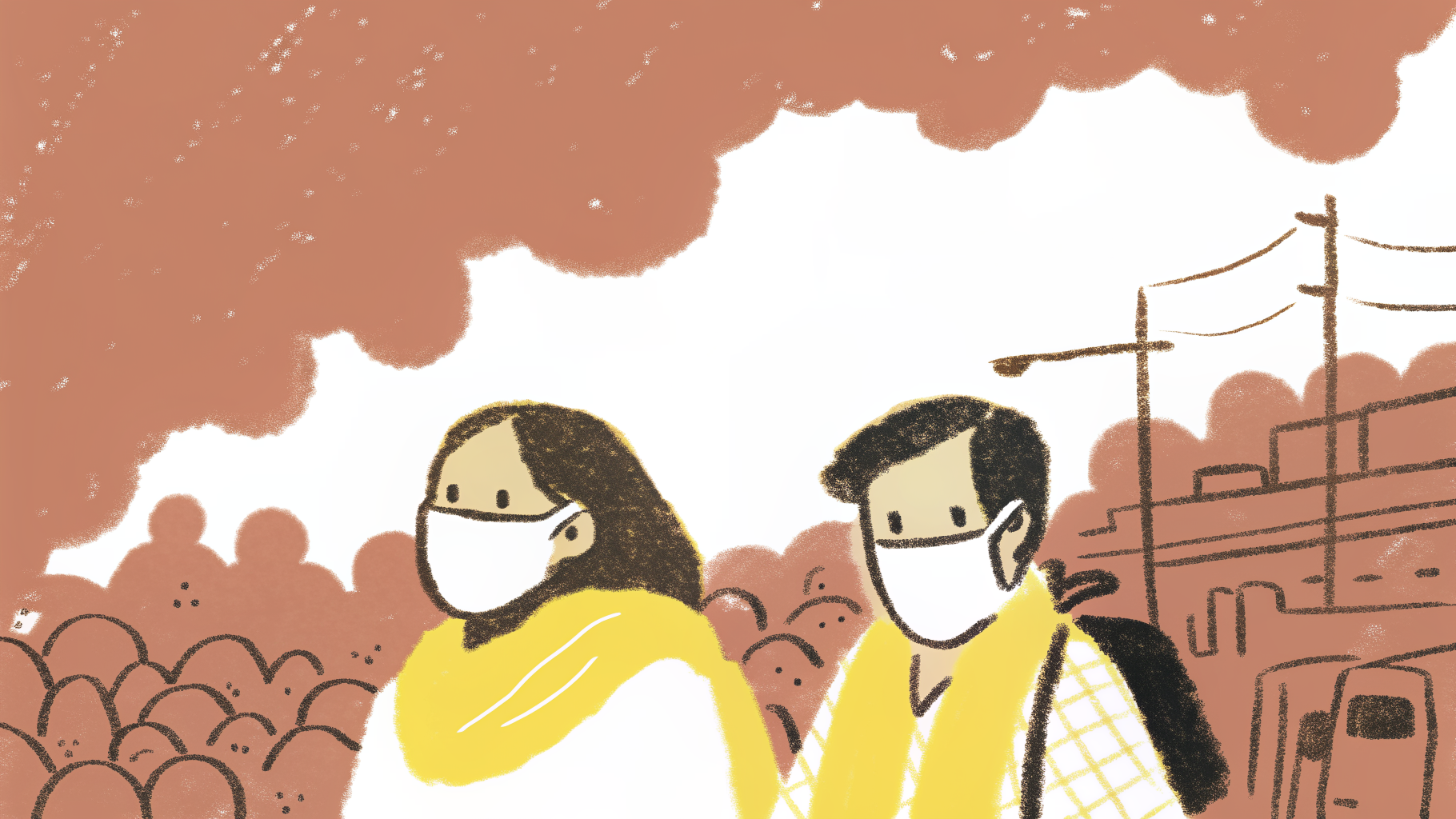
Delhi’s AQI reaches 581 as Punjab reports 3,144 farm fires and tighter curbs
Authorities restrict daily activity as trapped pollution worsens health risks.
Overview
Delhi’s air reached a dangerous peak just before Diwali: IQAir recorded a of 581 at 10:35 a.m. on Diwali eve, ranking the capital as the world’s most polluted major city. India’s measure uses a different scale, but also placed Delhi in the “very poor” category. The deterioration reflects several sources, including vehicles, dust, construction, industry, fireworks and , worsened by low wind that traps pollution over the region.
Authorities escalated restrictions from earlier stages to Stage II and then Stage III across . The latest measures target construction, older vehicles, stone crushers, mining, diesel generators and some buses, while officials are increasing road cleaning, water sprinkling and public transport, and considering staggered offices and online schooling. Firework-hour rules will be difficult to enforce. Punjab recorded 3,144 from September 15 to November 6, led by Tarn Taran, Ferozepur and Sangrur. Fines, police cases and machinery subsidies have not overcome farmers’ tight planting schedules and the cost of handling straw. Alternatives exist, but their scale is limited. The immediate health risks are greatest for children, older adults and people with heart or lung disease, while it remains unclear whether restrictions will improve air after Diwali or fires will keep rising.
Timeline
Delhi-NCR tightened GRAP restrictions ahead of Diwali as Punjab farm fires remained elevated
imposed restrictions, including controls on older vehicles and construction, while Punjab continued to report elevated farm-fire numbers ahead of Diwali.
Punjab farm fires exceeded 3,000 as Delhi pollution worsened before Diwali
Punjab’s farm-fire count was reported to have exceeded 3,000, while pollution worsened ahead of Diwali. Reports differed over the AQI figure and measurement system, so the specific reading of 581 should not be stated as definitive.
Authorities warned that very poor and severe air posed heightened risks to vulnerable residents
Pollution at these levels can aggravate and is especially concerning for children, older adults and people with existing heart or lung disease. Emergency restrictions therefore targeted several sources at once rather than treating farm fires as the sole cause. Public exposure also depended on the duration and intensity of the episode.
Delhi reached an IQAir US AQI of 581 and ranked as the world’s most polluted major city
IQAir recorded Delhi at a of 581 at 10:35 a.m. on Diwali eve, placing it first among major cities worldwide. The scale used by IQAir differs from the CPCB’s Indian index, so the number cannot be directly compared with Delhi’s CPCB reading. The result highlighted the extreme health risk as the festival approached.
Punjab began counting farm-fire incidents for the current residue-burning season
The Punjab Pollution Control Board opened its seasonal monitoring window on September 15. The count records linked to farmers burning after harvest. The period later became the basis for comparing enforcement with the rising fire total.
Punjab recorded 357 new farm fires and raised the seasonal total to 3,144
data showed 3,144 incidents from September 15 through November 6, up from 2,787 through the previous day. Tarn Taran recorded 611 incidents, followed by Ferozepur with 410 and Sangrur with 281. Bathinda recorded 262 and Amritsar 231, showing that burning remained concentrated across several districts.
Delhi’s official CPCB reading reached the very-poor category before Diwali
India’s index placed Delhi’s average air quality in the very-poor category, with substantial variation among monitoring stations. The CPCB index is not identical to , so the two readings should not be treated as interchangeable. Both nevertheless indicated hazardous deterioration.
Stage III restricted older vehicles in parts of NCR
CAQM invoked GRAP Stage III on November 6, restricting four-wheelers in Delhi and the NCR districts of Gurugram, Faridabad, Ghaziabad and , with applicable exemptions.
Stage III halted most non-essential construction and restricted major industrial dust sources
The restrictions covered activities such as excavation, piling, demolition, road construction and movement of materials on unpaved roads. Stone crushers, mining and certain were also required to shut or restrict operations. Diesel-generator use was limited except for approved emergency and essential services, while qualifying infrastructure projects received exemptions.
CAQM imposed GRAP Stage III across Delhi-NCR before Diwali
The activated Stage III on November 6 after Delhi’s average AQI remained very poor and several stations entered the severe range. The escalation followed forecasts of further deterioration during the Diwali period. Stage I and Stage II measures remained in force alongside the new restrictions.
Punjab recorded 2,787 farm-fire incidents before the total crossed 3,000
data showed 2,787 incidents through November 5. The increase came as Delhi’s air moved deeper into the very-poor range ahead of Diwali. The figures indicated that enforcement had not yet stopped seasonal residue burning.
Delhi restricted Diwali fireworks to designated hours
Fireworks were permitted only during designated hours on the Diwali weekend, with additional restrictions near hospitals, care homes, schools and other . Enforcement remained difficult, but the available evidence does not establish a measured pollution increase attributable specifically to fireworks.
Delhi introduced pollution-control measures as air quality worsened
Authorities invoked Stage I of and intensified pollution-control measures as Delhi’s entered the poor category. Schools and offices initially remained open, while later precautionary orders allowed up to 50% of some office staff to work from home.
Delhi-NCR expanded public-transport and traffic measures to reduce private-vehicle emissions
Authorities used measures including additional public-transport capacity, higher parking charges and efforts to reduce congestion. Offices were encouraged to stagger timings or adopt . The steps were intended to limit vehicle movement as air quality deteriorated.
Delhi-NCR authorities intensified road cleaning and dust-control operations
Agencies increased mechanized sweeping and water sprinkling as part of the early emergency response. Officials also strengthened traffic management and controls on dust-generating activities. The measures targeted non-fire sources while crop burning and weather continued to worsen the overall pollution burden.
Low wind and stagnant weather trapped pollution over Delhi-NCR
Weather conditions reduced the rate at which pollutants could disperse from the region. Forecasts indicated that Delhi’s air would remain very poor and could enter the severe category around November 7 to 9. The stagnant conditions increased the likely effect of emissions already present.
Delhi’s air quality deteriorated from moderate to poor conditions
Delhi’s rose from 179 in the moderate category on October 20 to 244 in the poor category on October 21, prompting to invoke Stage I of across the NCR. Schools and offices initially continued to operate normally.
Punjab districts in the Malwa and Majha regions became the main sources of reported farm fires
Tarn Taran, Ferozepur and Sangrur emerged among the districts contributing the largest shares of Punjab’s seasonal incidents. The concentration directed enforcement pressure toward districts where remained widespread. The totals continued rising despite penalties and field action.
Delhi’s air quality worsened as multiple pollution sources combined with weak dispersion
Vehicle emissions, dust, construction, industry and contributed to ’s pollution, while cooler temperatures and weak winds limited dispersion. The available evidence does not establish that any one source caused the entire episode.