
Commercial shipments halt in Gaza as winter supplies run low
Aid cannot reliably replace market goods like fresh food and clothing.
Overview
Commercial shipments into Gaza have stopped as colder weather nears. Fresh food, meat, winter clothes, shelter materials and other civilian goods are no longer coming in. Israel says merchants stopped imports after demanded fees for each truck and cash payments. Palestinian importers and truckers reject that explanation. They say Israeli restrictions caused the halt, while also acknowledging concerns about fees charged inside Gaza.
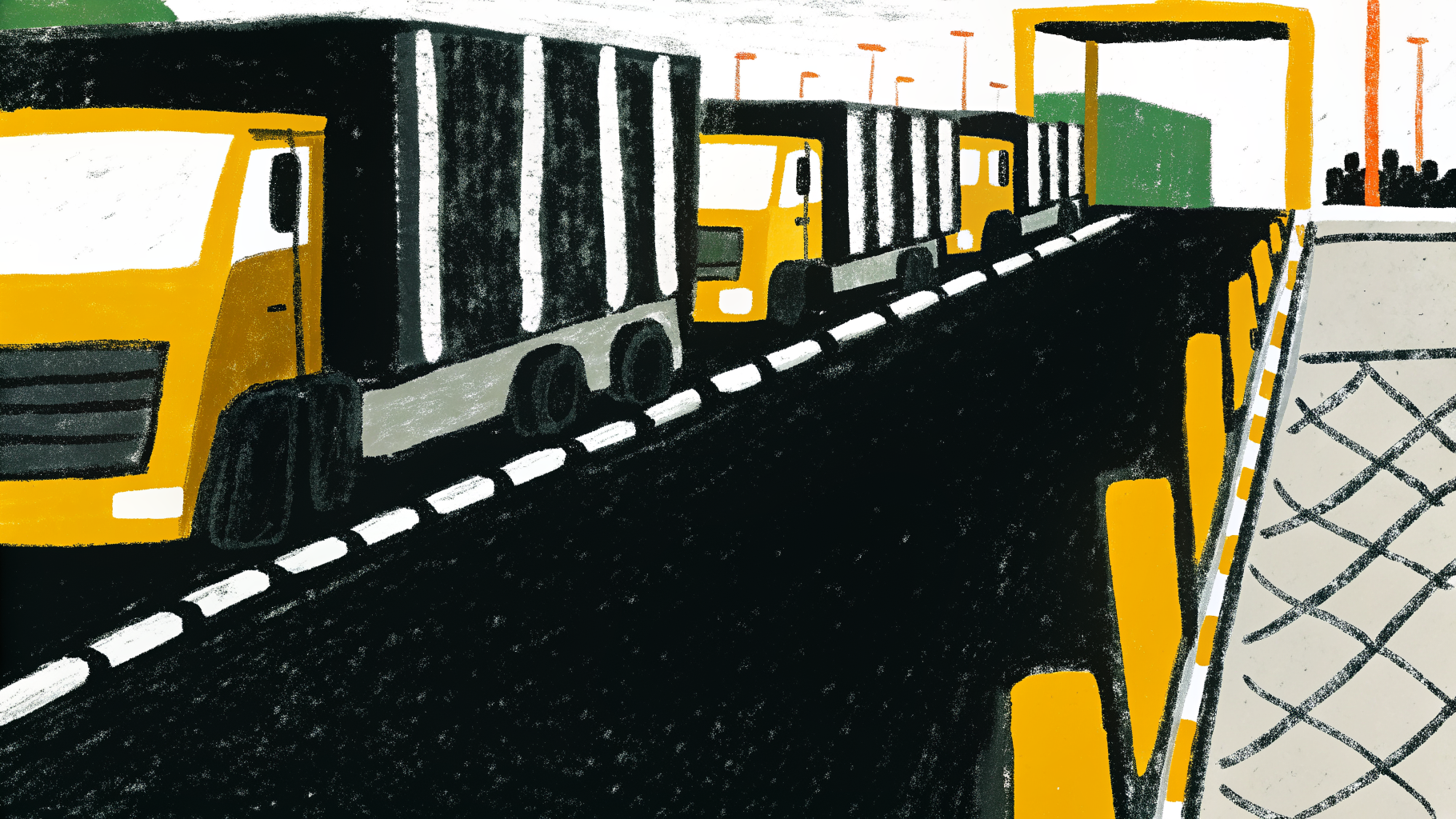
is now Gaza’s only working cargo crossing after closed. Aid deliveries and commercial imports use different systems. Aid does not reliably supply fresh produce, fuel, clothing and other goods sold in markets. The halt could therefore reduce supplies, raise prices and make goods harder for nearly two million people to afford. UN agencies warn that winter stocks and shelter materials are already running low. Commercial shipments had not clearly resumed, leaving civilians facing deeper shortages and delays.
Timeline
The latest reports left commercial shipments suspended as civilians faced higher shortages and prices
Available reporting did not establish that had resumed. The interruption threatened to reduce supplies of fresh and , winter clothing and household goods, increasing price and for roughly two million residents already dependent on aid and facing constrained winter preparations.
The competing explanations left Gaza’s only cargo route blocked while winter needs mounted
Israel maintained that merchants had chosen to stop imports because of claims, while Palestinian transport representatives said Israel was responsible. With closed, the dispute affected the single crossing available for both commercial and .
The shipment halt cut off commercial supplies that humanitarian aid does not consistently provide
Commercial imports supply fresh fruit and vegetables, meat, clothing, shelter materials, cooking fuel and other goods that are not reliably delivered through aid channels. The UN has separately reported that were critically low, underscoring the difference between and .
Gaza truckers disputed Israel’s account and said Israeli restrictions caused the halt
Nahed Sheheiber, head of , denied that merchants had requested the suspension. He said Israeli authorities had imposed the restrictions unilaterally, while acknowledging that merchants were also concerned about fees sought by Gaza’s .
Israel said Gaza merchants halted commercial imports after Hamas imposed truck fees
said no had entered Gaza for two days and attributed the suspension to merchants’ complaints about a on each incoming truck and a demand that . The halt affected fruit, winter clothing and other civilian supplies.
UN agencies reported depleted winter stocks and delayed shelter supplies in Gaza
UN agencies reported that depleted shelter and non-food-item stocks, , and restrictions or delays affecting the entry of critical materials constrained winter preparations in Gaza. OCHA said many supplies awaiting clearance were unlikely to arrive in time for an effective 2026-2027 .
Commercial cargo continued reaching Gaza but remained below a stable supply level
Private-sector traders collected 3,627 in August, while 865 entered during the week of August 24 to 30. September flows later weakened, with 788 truckloads collected between September 21 and 27, 10 percent below the previous .
Israel closed the Zikim crossing and left Kerem Shalom as Gaza’s only cargo route
The closure of Zikim in northern Gaza forced humanitarian and commercial cargo to use in the south. The UN said the concentration of traffic created congestion and made Gaza’s supply system more vulnerable to delays and restricted operating hours. remained the only operational after the closure.