
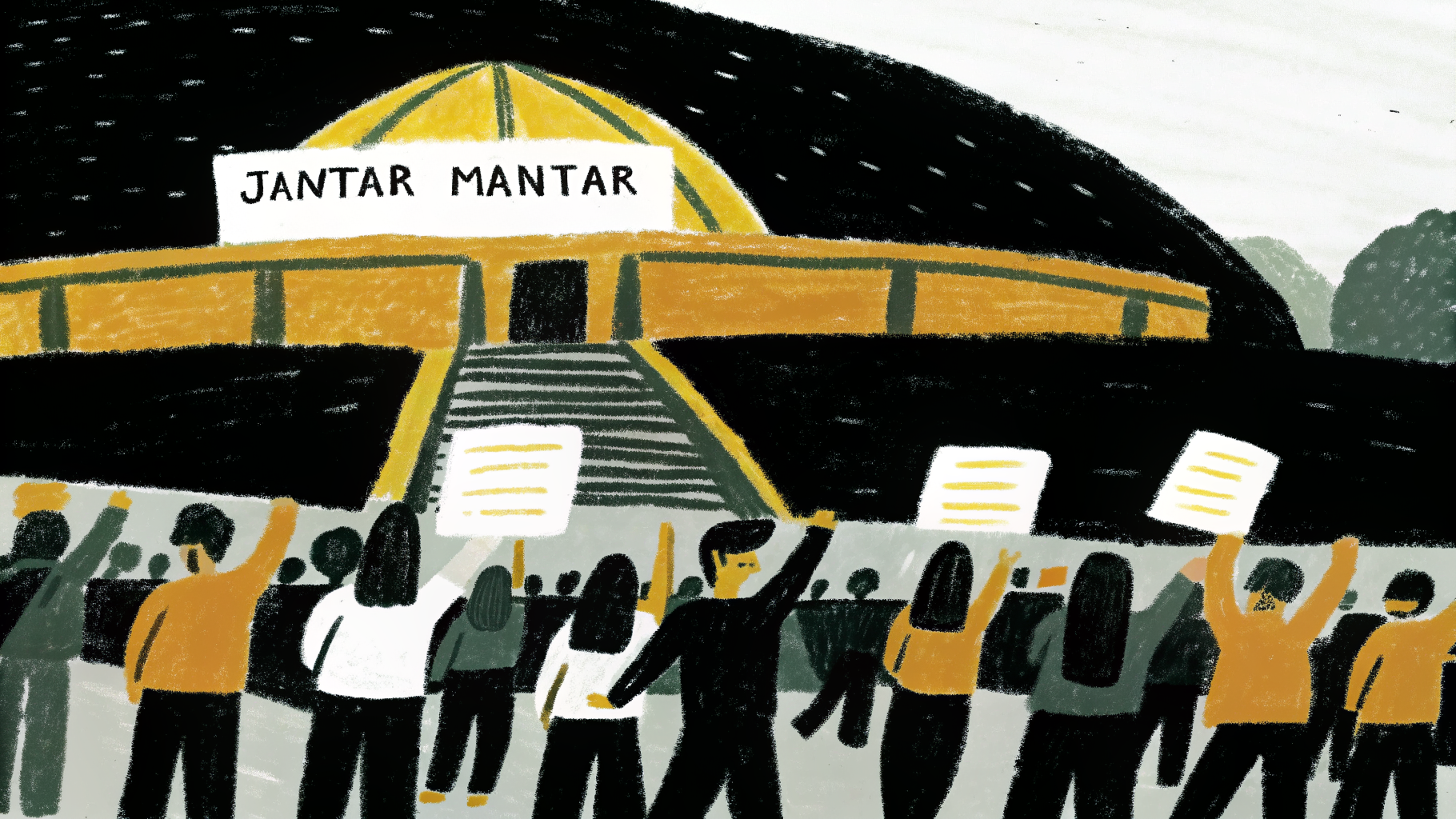
The Cockroach Janta Party’s at has become a test of how far student anger over paper leaks and wider can be pushed into sustained political pressure. By demanding Dharmendra Pradhan’s resignation and compensation for affected families, the protesters are framing the issue as one of accountability, not just one flawed exam, while their overnight stay signals a determination to keep the alive.
On the second day, the protest’s core demands remained unchanged, with pressing for ’s resignation and cancellation of the entrance exam. The group also reiterated its compensation demand for affected families. The persistence of these asks showed the protest was trying to convert public anger into concrete political pressure.
CJP is treating the NEET controversy as a question of ministerial accountability, not just an exam error. By keeping the resignation demand in place, the group is trying to turn student anger into direct political pressure on the education ministry.
Cancellation would reset the admissions process and acknowledge that the paper leak and irregularities were serious enough to invalidate the test. It would likely also push the authorities to decide on a fresh exam or another replacement process for candidates.
CJP is arguing that families bore the cost of a failed exam process, including stress, lost preparation time, and uncertainty about admissions. Compensation would signal that the state accepts some responsibility for the damage caused.
By Sunday, the protest had entered its second day with Dipke still present at . Reporting said he appealed to people to join the demonstration and asked to participate after completing their exams. The continued presence signaled that the had not been broken by police pressure.
It shows the sit-in was still intact despite police pressure. Dipke’s continued presence at Jantar Mantar on Sunday suggested the organizers had enough commitment to keep the protest going rather than disperse after one night.
He was trying to widen participation without interfering with candidates’ immediate exam obligations. That appeal suggests the protest was seeking broader student turnout while keeping the action compatible with ongoing test schedules.
During the protest, Dipke demanded cancellation of the and compensation for families affected by the crisis. He specifically called for for families of students who died by suicide following the . The demands linked the protest to the human cost of the controversy, not just institutional failure.
Dipke tied the exam controversy to direct harm to students and families. By demanding cancellation of the exam and compensation, he reframed the issue as accountability for both institutional failure and its human cost.
He singled out families of students who died by suicide after the paper leak, using the compensation demand to emphasize the severity of the crisis. The amount was meant to register the scale of loss, not just financial damage.
Despite the police instruction to leave, Dipke and his supporters remained at Jantar Mantar through the night. The move turned the demonstration into an overnight sit-in and showed that the group intended to continue beyond a symbolic daytime protest. That overnight hold became the foundation for the second-day action.
It showed the protest was meant to be sustained, not symbolic. By remaining through the night despite police instructions to leave, the group signaled it was willing to absorb pressure and keep the agitation alive into a second day.
It created the base for a second-day sit-in at Jantar Mantar. Once the protesters held the site overnight, they could continue organizing on Sunday instead of disbanding after the original daytime slot.
Delhi Police informed organisers that the permission for the gathering was limited to 10 am to 5 pm on Saturday. Officers then asked the protesters to vacate the site once that window ended. This created the first clear confrontation between the sit-in and official enforcement.
Because the police treated the gathering as time-limited: permission covered only 10 am to 5 pm on Saturday. Once that window closed, officers asked the protesters to leave, turning a permit issue into an immediate enforcement dispute.
It meant the sit-in could no longer be treated as a routine daytime gathering. Staying after 5 pm risked making the demonstration unauthorized, which gave police a basis to press for dispersal and escalated the standoff.
On Saturday, founder and supporters began an indefinite sit-in at Jantar Mantar over the NEET paper leak controversy. The protest demanded Education Minister ’s resignation and action on exam irregularities. The group also tied the sit-in to broader anger over repeated leaks and public distrust in the system.
An indefinite sit-in increases pressure by showing the protesters are willing to stay until there is a response. That makes the action more disruptive and more politically costly for the government than a one-day rally.
The protesters want Education Minister Dharmendra Pradhan to resign and for exam irregularities to be addressed. That turns the sit-in into a demand for accountability at the top of the education system, not just review of one paper leak.
If it draws more supporters or stays visible for long enough, it could intensify public pressure on the government to respond. If officials do not engage, the protest may remain a symbol of wider distrust in exam fairness.
Before returning to Delhi, the group held demonstrations across various Indian cities, according to later reporting on the Jantar Mantar sit-in. Those protests kept pressure on authorities while building momentum for a larger capital-based action. The return to Delhi suggested the campaign was being escalated rather than ended.
The city-to-city protests kept pressure on authorities while building momentum for a larger capital-based action. That suggests the campaign was being escalated deliberately, not wound down after the earlier demonstrations.
It signaled an escalation toward a more visible national confrontation. Returning to Delhi after protests elsewhere suggested the organisers wanted the issue centered where it would be hardest for policymakers to ignore.
The June protest used placards, slogans, and public messaging to link NEET to a wider pattern of alleged in India’s exam system. Organisers presented the campaign as a challenge to repeated irregularities, not just a single test controversy. This helped position the issue as a national accountability fight.
They were arguing that NEET was not an isolated case, but part of a broader pattern of alleged paper leaks. That framing raises the stakes by presenting the problem as a national exam-system failure rather than a single controversy.
It makes the campaign harder to dismiss as one-off student anger. By linking multiple exams, the organisers could appeal to more students and push authorities to respond to exam integrity as a wider governance issue.
supporters held a protest at over repeated exam paper leaks and irregularities. The demonstration focused on and other competitive tests, and framed the issue as a broader failure of exam accountability. It marked one of the group’s first visible public actions in this campaign.
It was one of the group’s first visible public actions, which helped turn exam anger into a sustained political campaign. By holding it at Jantar Mantar, the protesters signaled they wanted national attention, not just a local demonstration.
The protest framed NEET as part of a wider failure in exam accountability, linking paper leaks in one test to a larger pattern of irregularities across competitive exams. That made the issue about systemic trust, not only one exam paper.