
CJP Protest Spreads As Modi Responds
Will the government’s outreach calm a movement demanding Pradhan’s resignation?
Overview
A student-led protest over exam leaks has become a wider test of the government’s credibility on education, fairness and . What began as a has drawn activists, students and opposition support, putting pressure on Narendra Modi’s government to answer demands for , protection for protesters and tougher action on exam fraud.
Timeline
Government offer is rejected
After the prime minister’s comments, the government’s outreach was rejected by CJP, which said the proposed channel did not meet its demands or the scale of the crisis. The movement insisted that any discussion had to include for the , compensation for affected families, and action against officials, leaving the two sides in an open .
Modi responds publicly for the first time
On 23 July, Narendra Modi made his first public response to the growing , bringing the protest directly into . His remarks came after days of unrest, , and widening demonstrations, and they marked the first time the addressed the movement head-on.
Sonam Wangchuk’s strike adds pressure
Support from activist continued to amplify the protest, with his becoming a central symbol of the movement’s moral force. His earlier in the week helped harden CJP’s claim that the state was responding to a with rather than engagement.
Movement rejects narrow talks channel
CJP leaders rejected the idea of talks framed around a , arguing that the government needed to address the substance of the rather than manage the optics. Their position was that any dialogue had to come with action on , , and protection for , not just an offer to meet.
CJP vows to keep Jantar Mantar camp going
Hundreds of protesters continued at Jantar Mantar on 22 July, keeping pressure on the government even as police tightened security around . CJP leaders said the earlier crackdown had not ended the , and they signaled that the protest would continue until their .
Protests spread beyond Delhi
On 22 July, demonstrations supporting CJP were reported in multiple cities outside the capital, including , , and , showing the agitation had moved beyond Jantar Mantar. Delhi remained the main protest hub, but the geographic spread made the movement look more like a than a local student rally.
Campus and civil society support grows
The movement drew in more students, , and around Jantar Mantar, giving it a broader political character beyond the original Delhi sit-in. Reporting described the protest as moving from a youth-led initiative into a larger centered on and government responsibility.
CJP expands its demands
By this stage, CJP was not only demanding Pradhan’s resignation, but also for families of students who died by suicide, release of activist , and protection for . The movement framed the NEET leak as part of a wider crisis of and , not a single isolated scandal.
Dialogue attempt begins with government outreach
The government opened a first channel of on 20 July, with reports saying CJP representatives went to ’s office as tried to engage the movement. That outreach did not resolve the , but it marked the first formal sign that the protest had become a political problem the government had to answer.
Parliament march triggers wider crackdown
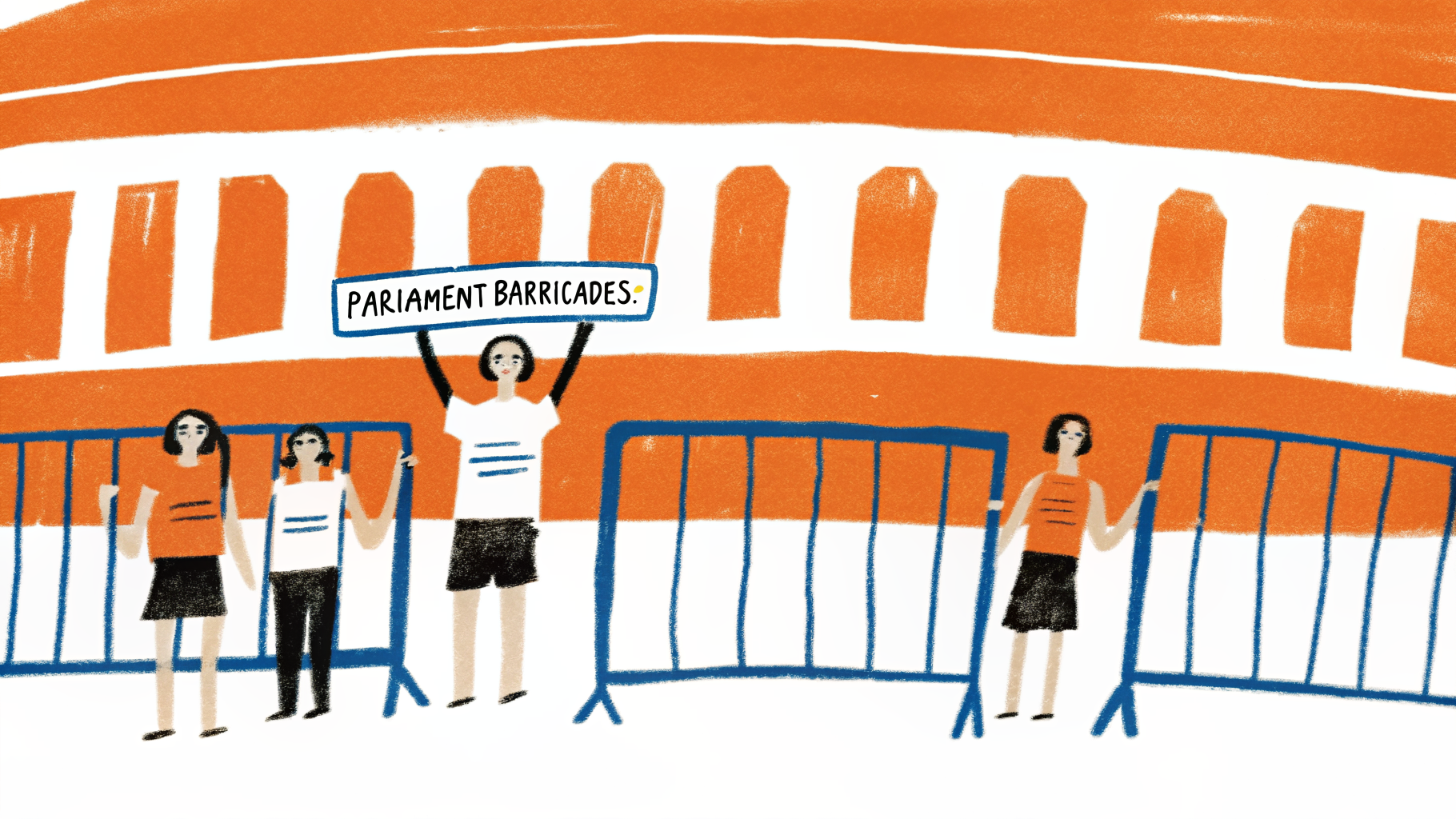
Thousands of supporters gathered at and tried to march toward , turning the protest into a major confrontation with Delhi police. The march was met with tear gas, baton charges, and detentions, and the immediate issue remained the , Education Minister Dharmendra Pradhan’s resignation, and accountability for .