
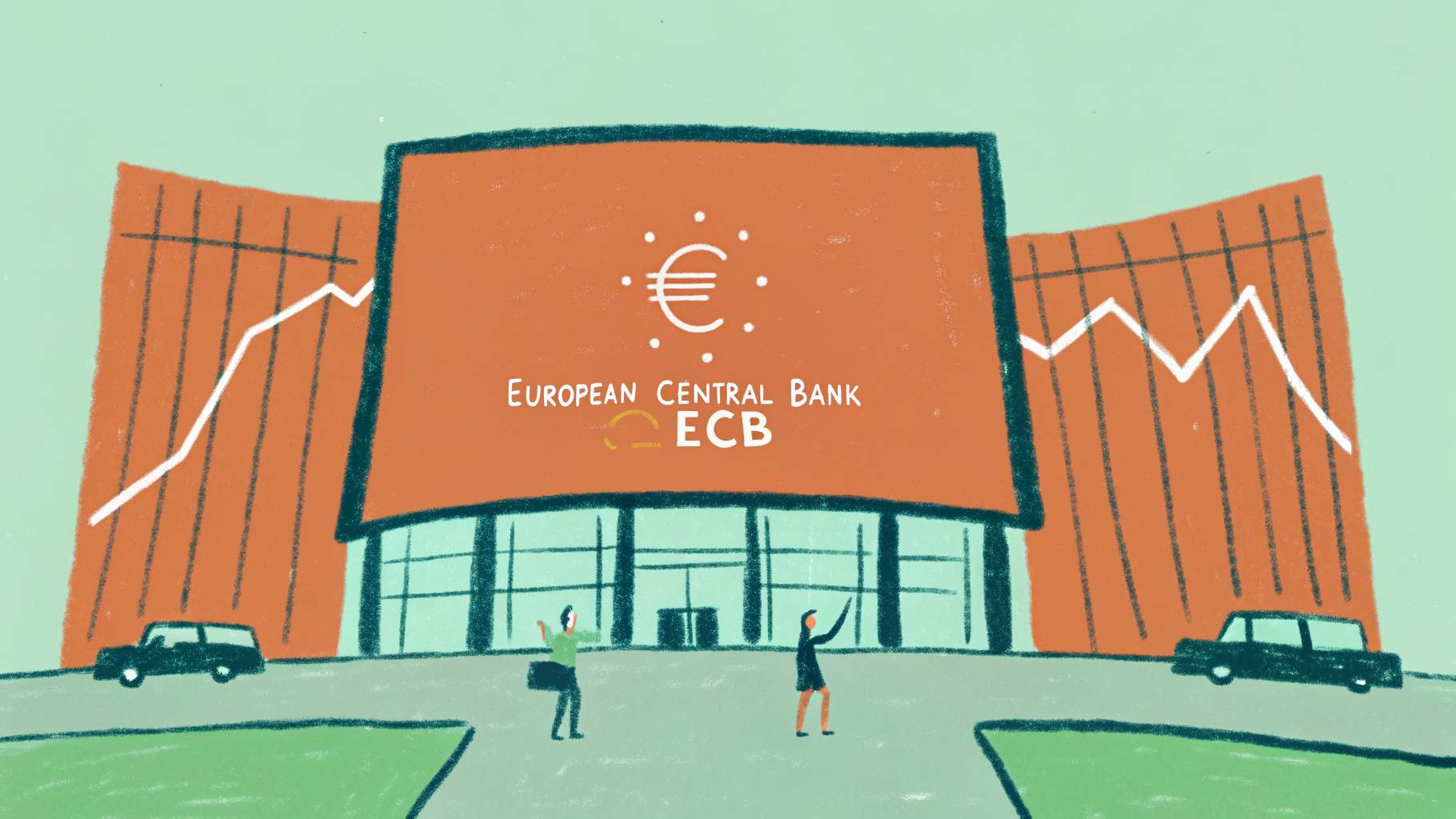
ECB raises rates, Lagarde announces early exit and EU leaders weigh successors
Energy costs force tougher choices between price control and economic growth.
Overview
Christine Lagarde will leave the on February 7, 2027, months before her term ends. EU leaders must choose her successor as an oil shock from the Iran war pushes prices higher. The ECB has raised interest rates and later paused. It warns that energy costs could keep inflation above its while slowing growth. Markets are weighing higher bond yields, a weaker euro and the possibility that rates will stay high.
The will appoint the next president through the treaty process. Former Spanish governor and former Dutch governor are leading candidates. A choice before France’s election could reduce political uncertainty. The successor must maintain trust and a steady policy while balancing inflation, jobs and growth. Lagarde will stay in office during the changeover, while the continues making decisions together.
Timeline
The ECB and European Council set up a continuity-focused transition before Lagarde’s exit
The ECB said Lagarde had notified both the and the , while Costa said the succession process would start immediately. Lagarde remained president until February 7, 2027, leaving the responsible for collective monetary-policy decisions during the interim. The accelerated appointment process was intended to limit disruption as the bank managed the oil-driven inflation shock.
The ECB faced a policy trade-off between containing inflation and protecting growth
Higher oil prices can raise , transport costs and household expenses while reducing purchasing power and economic activity. ECB analysis said the shock was already weighing on sentiment and could materially affect the euro-area outlook if it persisted. That trade-off made continuity and credibility in the leadership transition especially important for and rate decisions.
Lagarde’s departure coincided with renewed energy-driven inflation concerns
Christine Lagarde announced that she would leave the ECB on 7 February 2027, prompting a succession process. The announcement came as the ECB confronted higher energy costs, inflation risks and weaker growth concerns, putting future interest-rate decisions and financial-market conditions under scrutiny.
Pablo Hernández de Cos and Klaas Knot emerged as leading successor candidates
Former Bank of Spain governor Pablo Hernández de Cos and former Dutch central-bank governor Klaas Knot were identified as leading potential replacements. Both candidates have national central-bank experience relevant to the . Neither had been formally appointed, leaving the final choice with EU governments under the .
EU leaders gained a chance to choose the next ECB president before France’s election
Lagarde’s February departure gives current EU leaders time to settle the succession before France’s presidential election. Reporting linked the timing to political uncertainty surrounding the contest, including the possibility of a victory. The election timetable increased the political sensitivity of choosing a successor while preserving the .
The European Council began the process to appoint Lagarde’s successor
Costa said the appointment process would begin immediately and proceed without delay to ensure a smooth transition. The European Council, rather than the ECB alone, will appoint the next president after the treaty-based nomination procedure. The timetable was designed to produce a decision before Lagarde’s departure.
Christine Lagarde announced she would leave the ECB on February 7, 2027
Lagarde informed the ECB Governing Council and European Council President António Costa that she would step down on February 7, 2027, months before her scheduled term ended. The early exit immediately created a succession issue while the bank was confronting renewed energy-driven inflation. The ECB confirmed that her successor would be appointed through the European Council process under of the Treaty on the Functioning of the European Union.
The ECB projected that energy costs would keep euro-area inflation above target into 2027
The ECB reported that euro-area headline inflation rose to 3.3% in August from 2.9% in July, driven by energy inflation linked to the Middle East conflict. It said higher energy prices were likely to keep inflation well above target through the first half of 2027. The bank expected energy inflation to fall later, but the near-term shock complicated its rate path.
The ECB raised interest rates as the Middle East conflict intensified inflation pressure
The raised all three key ECB interest rates by . The ECB said the conflict in the Middle East and higher energy prices were keeping inflation above target for longer. Its staff projections put average headline inflation at 3.0% in 2026, 2.5% in 2027 and 2.1% in 2028.
The ECB warned that an energy shock was raising inflation risks
The ECB reported that euro-area reached 3.0% in April 2026 and annual was 10.9% in May. Its analysis warned that sustained energy-price increases could weaken growth and create more persistent inflation pressure, without establishing that the Middle East conflict alone caused the shock.