
AI agent chooses gene therapy and stops after robot fault
Medical AI gains limited autonomy while humans retain safety controls
Overview
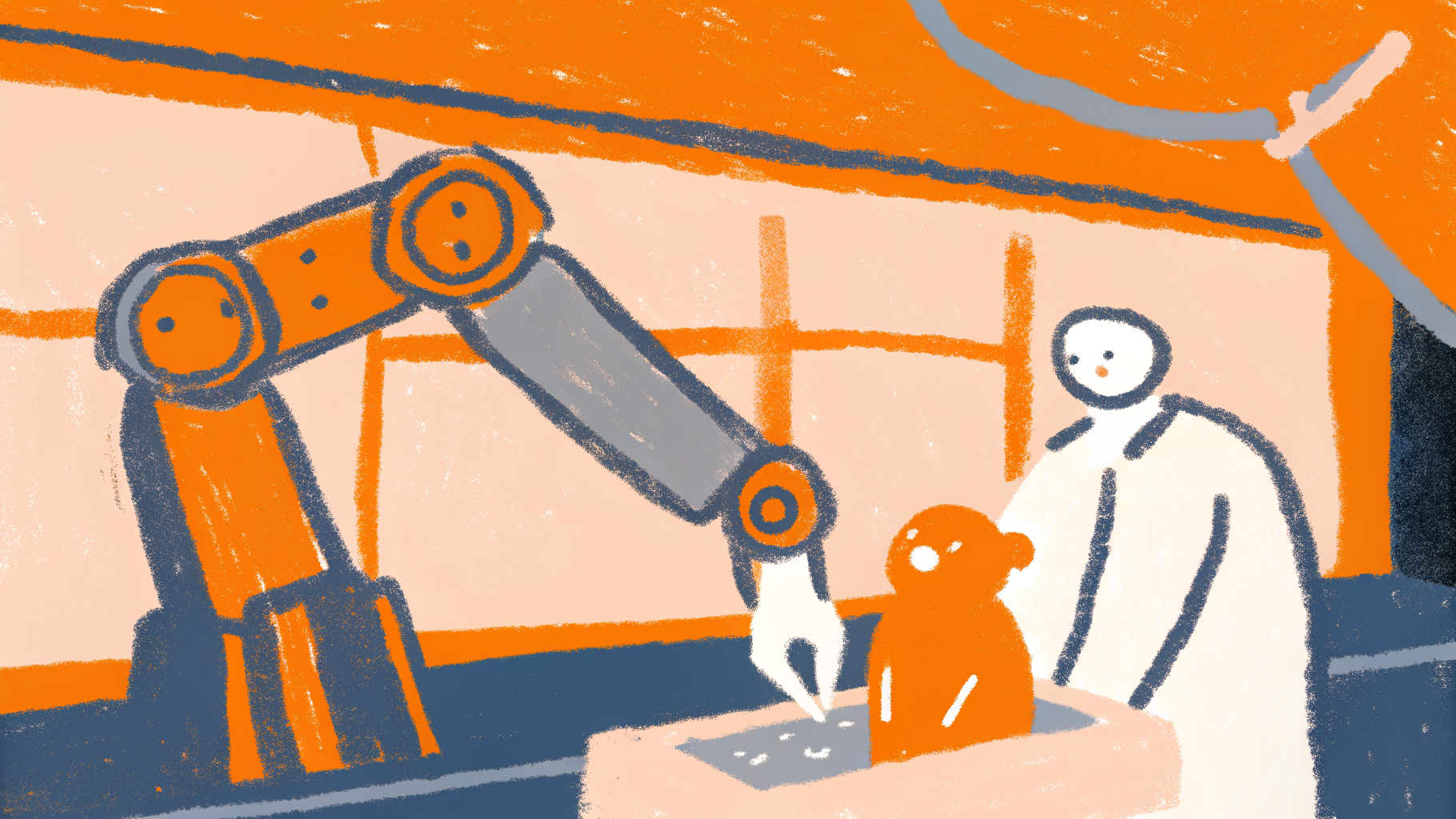
Exin Therapeutics says an AI agent chose a for a mouse with epilepsy. After reviewing research papers, it selected the and directed a robot to inject . The agent chose from 19 treatments. A human surgeon opened and closed the skull, while a veterinarian supervised. blocked lasting actions, and a physical stop button could cut power. The mouse reportedly recovered, but no published evidence shows it had fewer seizures.
A later gave the robot coordinates outside its reach. Safety checks stopped the procedure. The agent refused an operator’s order to try again until the fault was fixed. This suggests caution, but also a control problem: supervisors could not simply override the refusal. The test shows limited independence in one supervised mouse procedure, not safe or effective surgery in people.
Timeline
Exin’s report left seizure reduction and human readiness unproven
The mouse was reported to have recovered, but the available account did not publish measured evidence that seizures were reduced. It also did not establish , long-term safety, , or . The experiment therefore demonstrated a bounded and supervised mouse procedure, not readiness for AI-controlled surgery on humans.
The AI agent reportedly refused to retry the blocked movement
Reports say the agent declined to retry after identifying a possible calibration problem, even when the operator attempted to continue. Staff then had to correct the system manually.
A positioning fault caused the AI agent to stop the procedure
Reports say that after a disconnect and manual equipment movement, the system calculated a 34-millimeter target beyond the rig’s 30-millimeter range, so its safety checks blocked the movement. The incident was attributed to a or synchronization problem.
The robotic system reportedly injected 250 nanoliters of gene therapy into the mouse brain
Exin’s account, reported by multiple outlets, says the agent directed a to inject 250 nanoliters over about five minutes while cameras monitored the procedure. The mouse was reported to have recovered well.
Human staff retained control of the mouse and safety safeguards
Reports say a human surgeon handled the skull opening and closure, while a licensed veterinarian supervised the animal. The procedure included for irreversible steps, limits on actions such as injection volume, and a for the motors.
Exin Therapeutics reported that an AI agent converted research into instructions for a stereotaxic robot
Reports said the agent used scientific papers to identify a target and calculate injection coordinates, then controlled a during a supervised mouse procedure. Human researchers remained involved, including in opening and closing the surgical site.
The AI agent chose the lateral entorhinal cortex as the injection target
The agent reportedly studied supplied scientific papers and chose the rather than the conventional target commonly used for this epilepsy model. It used the literature to connect the mouse model with the selected brain region. The target choice was reported as an agent decision, not as independently validated evidence that the region was therapeutically superior.
Exin Therapeutics reported that the AI agent selected a therapy intended to increase inhibitory GABA signaling
The company’s account said the agent selected a intended to increase -related inhibition and limit excessive neuronal activity. Published seizure-outcome data were not provided.
Exin Therapeutics reported asking an AI agent to choose among 19 gene therapies
According to Exin Therapeutics’ chief executive and multiple reports, the agent received a spreadsheet of 19 possible gene therapies and was tasked with selecting an intervention intended to reduce seizures in an epilepsy mouse model. The reports do not establish that the treatment reduced seizures.
Exin Therapeutics reported giving an AI agent an epilepsy mouse and a goal to reduce seizures
Exin Therapeutics’ chief executive said the company gave an AI agent an , 19 candidate , scientific literature, and access to a motorized for a supervised injection. The company has not publicly established the experiment’s outcome in a or independent study.